

Are you the author? Sign in to claim
MCP bridge between Chromium browsers and Claude Code — browser automation tools + Claude chat panel for browsers where t
 Chromium Bridge
A bridge between your Chromium-based browser and Claude Code. The official
"Claude in Chrome" extension connects in some Chromium browsers (Arc, Vivaldi,
and others) but automation hangs: its tools are built on the tab groups API,
which is missing or broken there. This bridge uses only plain
chrome.tabs / chrome.scripting / chrome.debugger, so it works in any
Chromium browser that can load an extension.
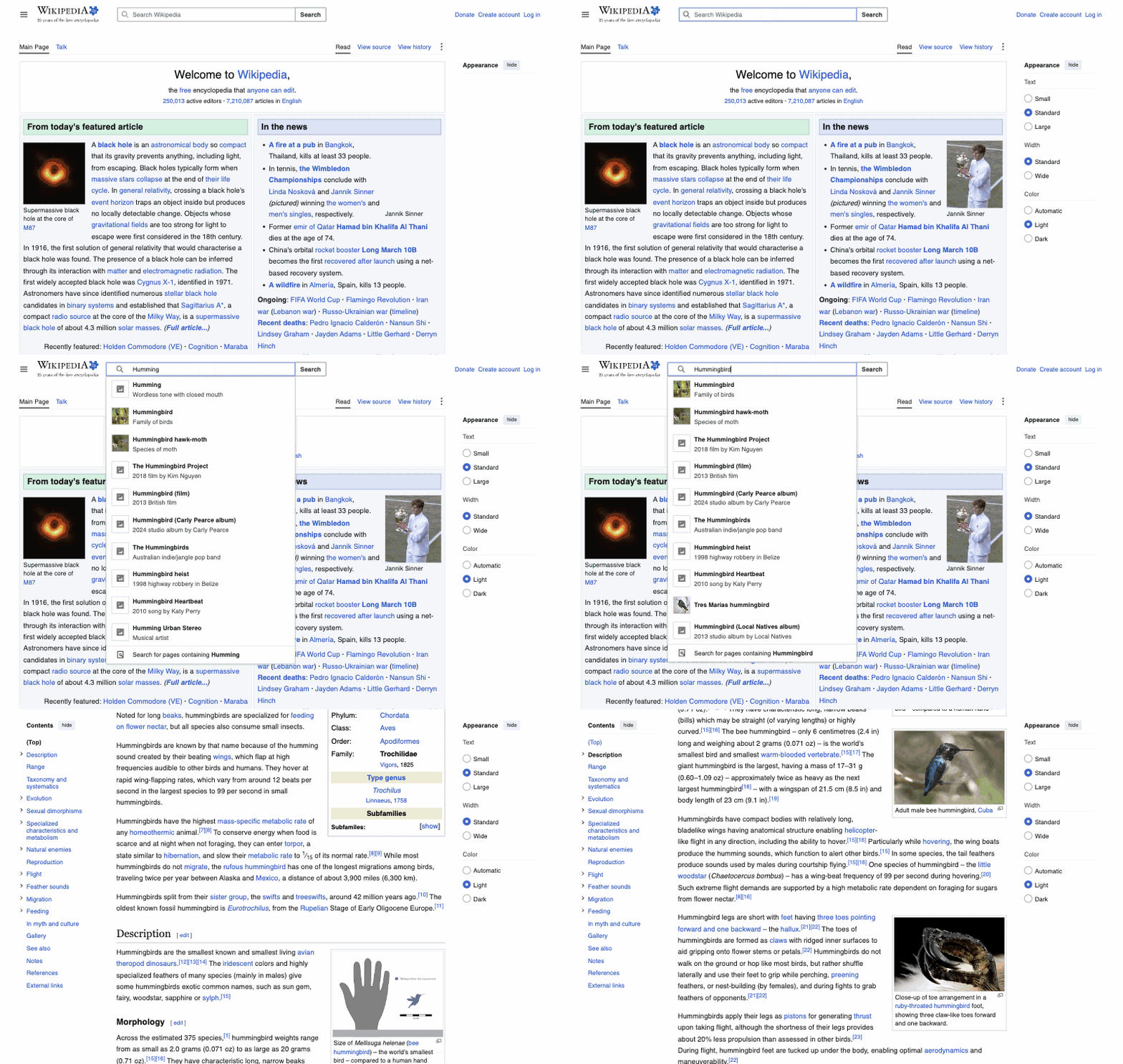
Claude driving the browser through the bridge — opening Wikipedia, typing a search, and landing on the article:
Claude Code ⇄ (stdio MCP) ⇄ server/index.mjs ⇄ (WebSocket, 127.0.0.1:8929) ⇄ extension in the browser
                                   ⇅ (WebSocket /chat)
                            chat panel (popup on the extension icon)
extension/ — an MV3 extension: the service worker keeps a WebSocket to the
local server and executes its commands (tabs, navigation, page text,
screenshots, clicks, form filling). Clicking the icon opens the chat panel
(chat.html) — a popup anchored to the extension icon.server/ — an MCP server (stdio) that exposes the browser_* tools to
Claude Code and proxies them to the extension. It accepts WS connections
only from a chrome-extension://… Origin — regular web pages cannot connect.
It also serves the /chat channel: panel messages run through the
Claude Agent SDK (authenticated via the Claude Code login) with the same
browser_* tools; built-in tools (Bash, Read, etc.) are disabled.An equivalent of the "Claude in Chrome" side panel: a popup that opens when you
click the extension icon (no chrome.sidePanel — it is not supported
everywhere). The chat can see the browser: list tabs, read pages, take
screenshots, and click.
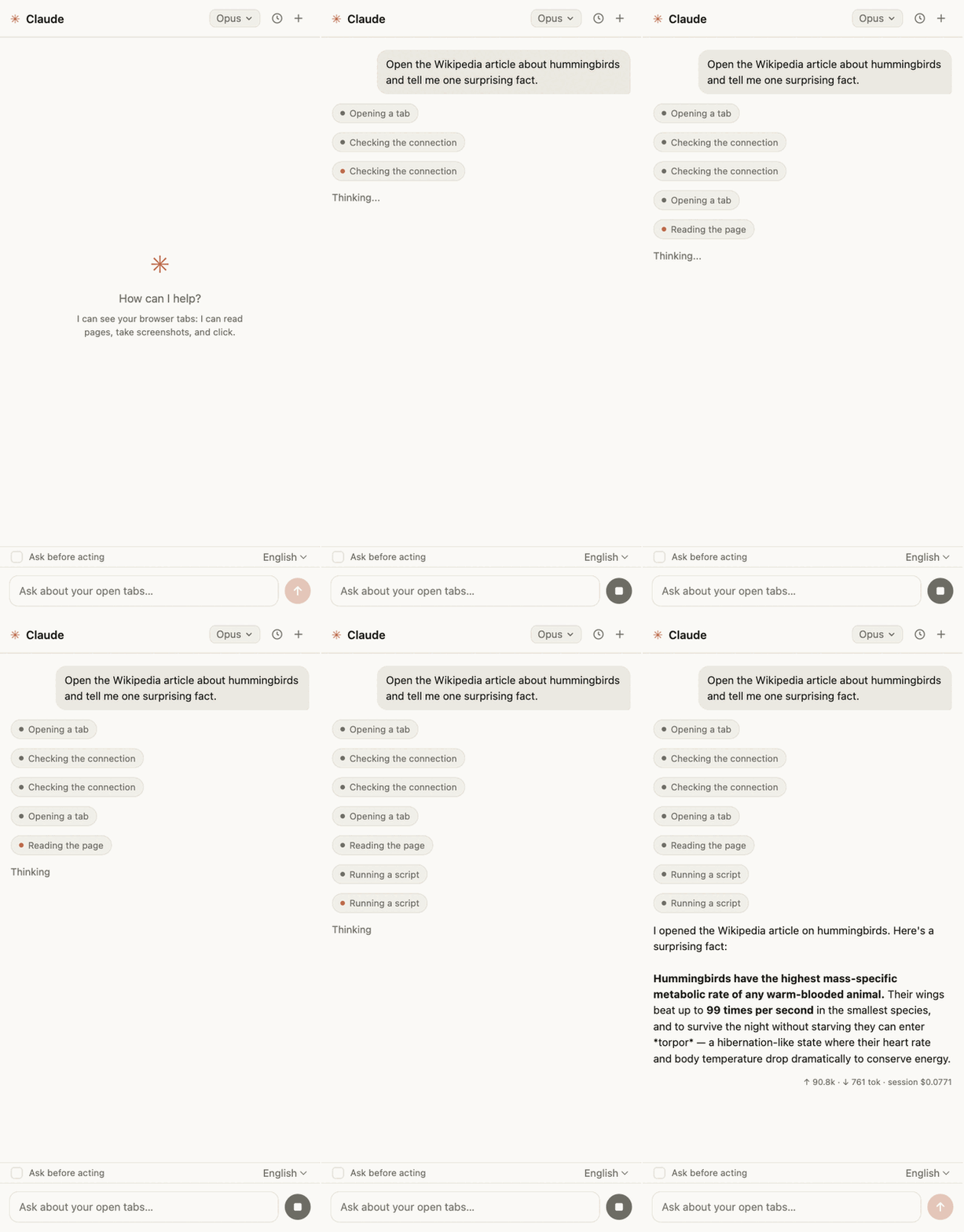
The panel UI is in English by default and switches to Russian automatically when the browser UI language is Russian. A language selector (Auto / English / Русский) in the bottom bar overrides auto-detection; the on-page badge follows the same choice.
resume. A turn that is in flight when the popup closes is interrupted.chromium-bridge MCP); otherwise the panel shows
"Server unavailable".~/.claude/settings.json (whatever was set via /model; SDK sessions do not
read Claude Code settings themselves, the server passes the model
explicitly), the other entries are hard overrides. Switching applies on the
fly (setModel) and is remembered. Startup override:
CHROMIUM_BRIDGE_CHAT_MODEL=sonnet in the server environment.
Port: CHROMIUM_BRIDGE_PORT (8929 by default) — server side only; the
extension always connects to 8929, so changing the port also means editing
WS_URL in extension/sw.js and extension/chat.js.When Claude acts on a tab (from the panel or from Claude Code):
Both are hidden on screenshots so they don't end up in the frame and confuse
the model when working with coordinates. On pages where scripts cannot be
injected (chrome:// and the like) the indication is silently skipped.
Extension: clone this repository, open chrome://extensions (in the
right space/profile!), enable "Developer mode", click "Load unpacked", and
pick the extension/ folder.
MCP server — either way:
claude mcp add -s user chromium-bridge -- npx chromium-bridgecd server && npm install, then
claude mcp add -s user chromium-bridge -- node "$(pwd)/index.mjs".It loads at session start — restart your Claude Code session after installing the extension.
For other MCP clients, add this to your config:
{
  "mcpServers": {
    "chromium-bridge": {
      "command": "npx",
      "args": ["chromium-bridge"]
    }
  }
}
Check: the browser_status tool should return {"connected": true}.
As of v0.5.
| Tool | What it does |
|---|---|
browser_status | Check the connection to the extension |
browser_tabs_list | List tabs (id, title, URL) |
browser_tab_create / browser_tab_close | Open / close a tab |
browser_navigate | Navigate to a URL; back/forward for history |
browser_page_text | Page title, URL, and visible text |
browser_computer | Mouse/keyboard/screenshots via CDP: clicks by coordinates or ref, drag, hover, type, key combos, scroll, zoomed region screenshot, wait |
browser_read_page | Accessibility tree with ref ids (filter=interactive) |
browser_find | Find elements by text/role, returns refs |
browser_form_input | Set input/textarea/select/checkbox/contenteditable value by selector or ref |
browser_click | DOM click by CSS selector (plain .click()) |
browser_upload_file | Put files into an <input type="file"> |
browser_javascript | Run JS on the page (await supported) |
browser_console_messages | Tab console (with a regex filter) |
browser_network_requests | Tab network requests (with a regex filter) |
browser_resize_window | Window size |
browser_gif_start / browser_gif_stop | Record a GIF of the tab → file; on long recordings the frame rate halves automatically, so the whole scenario fits |
Everything except basic tab operations works through chrome.debugger (CDP):
screenshots don't require activating the tab, clicks are real mouse events,
and console/network are collected from the first CDP touch of the tab.
chrome-extension://…, which keeps web pages out. It
does not distinguish between extensions, and a non-browser local process can
fake the Origin header — anything running as your user is trusted, like with
most local dev tools. Don't run the bridge on a shared machine.Run Claude Code as an MCP server so any agent can delegate coding tasks to it
 @microsoft✓ Official
Browser automation using accessibility snapshots instead of screenshots
 @googleapis✓ Official
Google's universal MCP server supporting PostgreSQL, MySQL, MongoDB, Redis, and 10+ databases
 @github✓ Official
Official GitHub integration for repos, issues, PRs, and CI/CD workflows