

Are you the author? Sign in to claim
Marketplace-ready Agent Skill for turning business metrics into executive-ready strategy visualization specs
English | 日本語
Marketplace-ready Agent Skill that turns messy notes, metrics, and prose into executive-ready visualizations — board slides, reports, proposals, training materials, technical diagrams, and infographics — with a built-in renderer that produces real SVG slides.
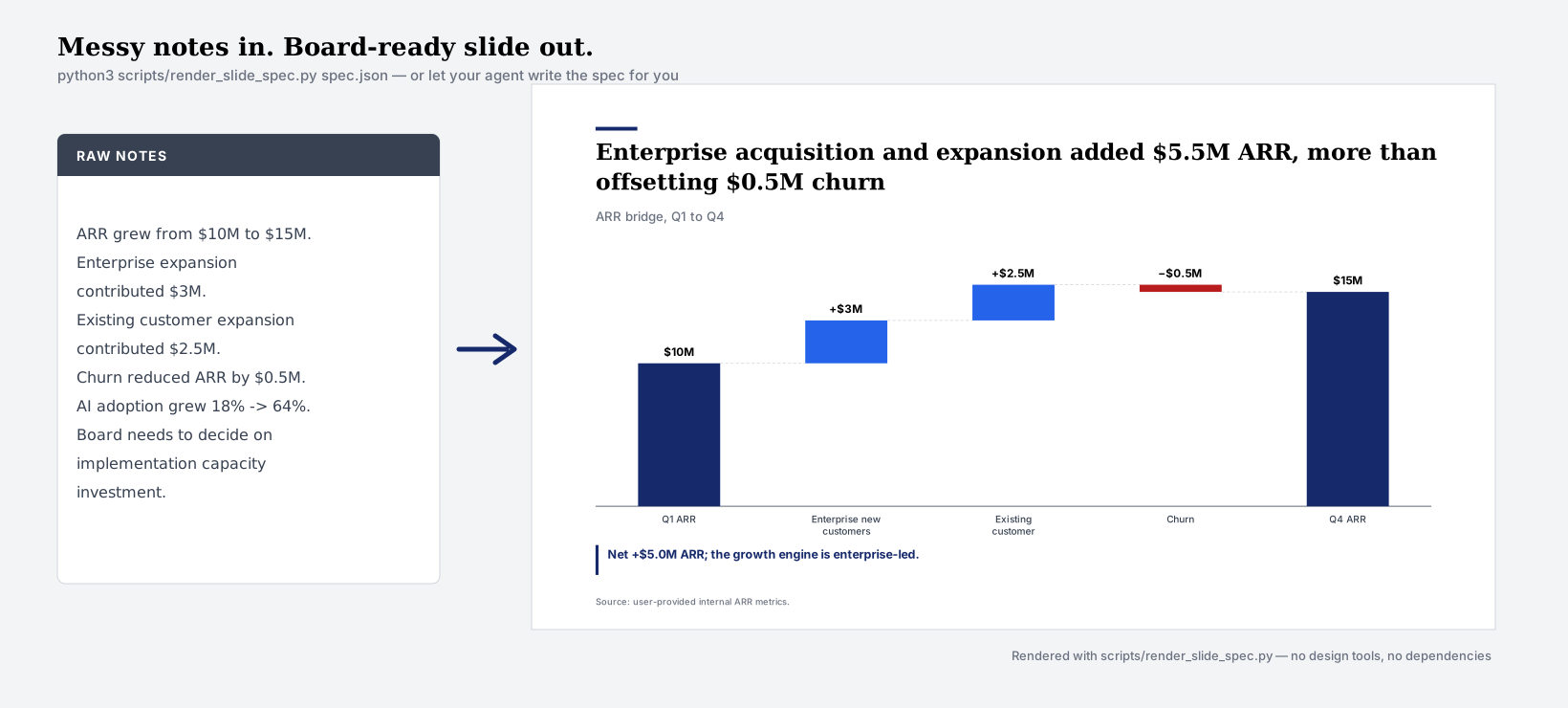




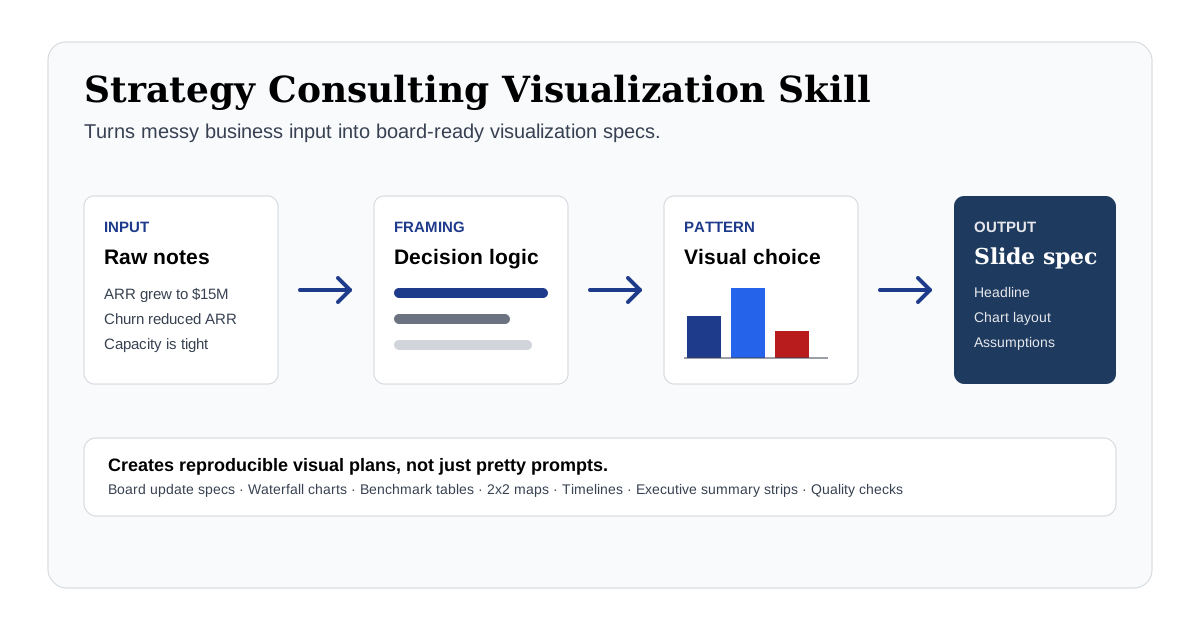
This repository is now packaged for distribution testing:
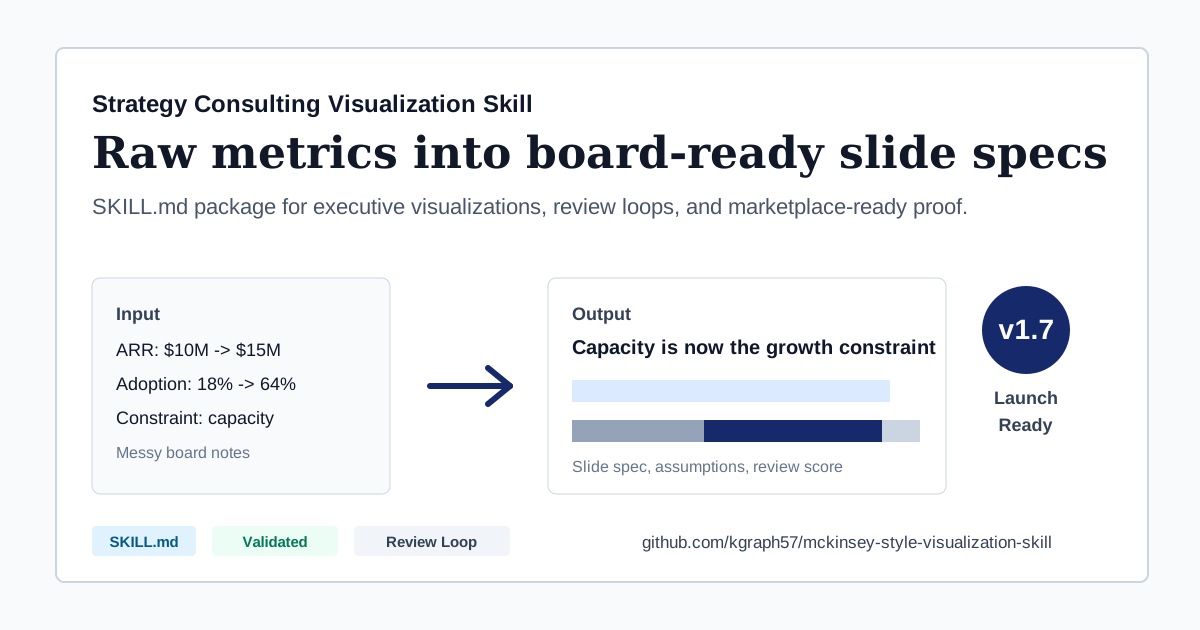
Install the skill:
git clone https://github.com/kgraph57/mckinsey-style-visualization-skill.git ~/.claude/skills/strategy-consulting-visualization
Render your first slide — no dependencies beyond Python 3:
python3 scripts/render_slide_spec.py examples/render-specs/arr-waterfall.json -o slide.svg
Or ask your agent:
Use the strategy consulting visualization skill to turn these notes into a board slide spec:
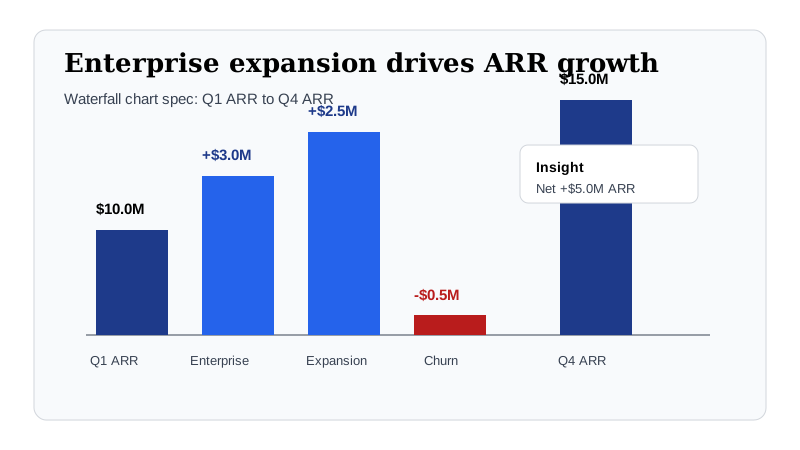
ARR grew from $10M to $15M. Enterprise added $3M, expansion $2.5M, churn -$0.5M.
The board must decide on implementation capacity investment.
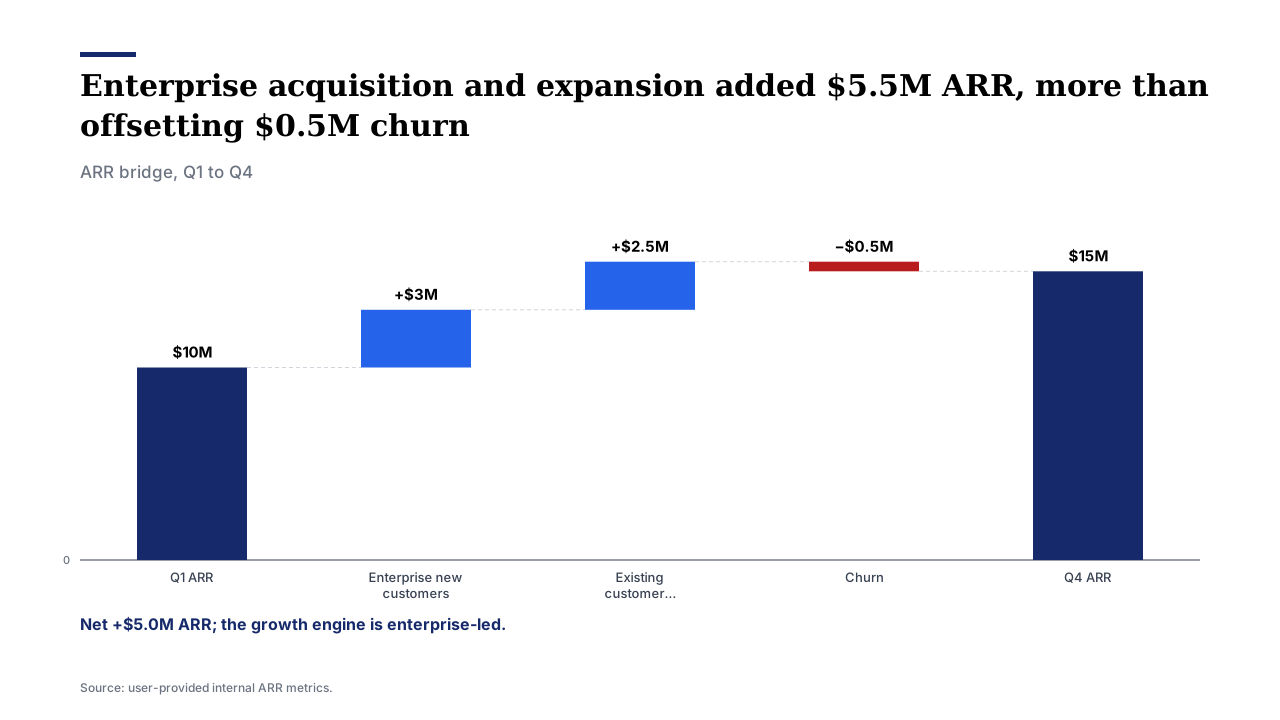
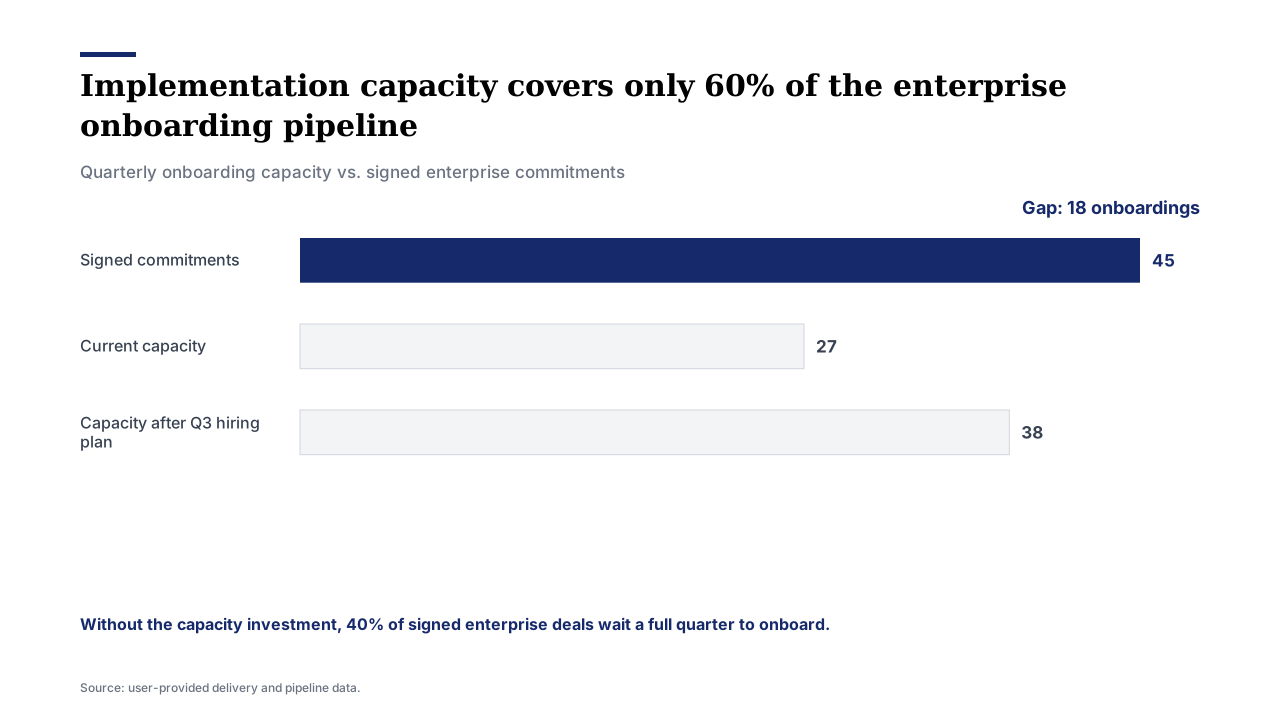
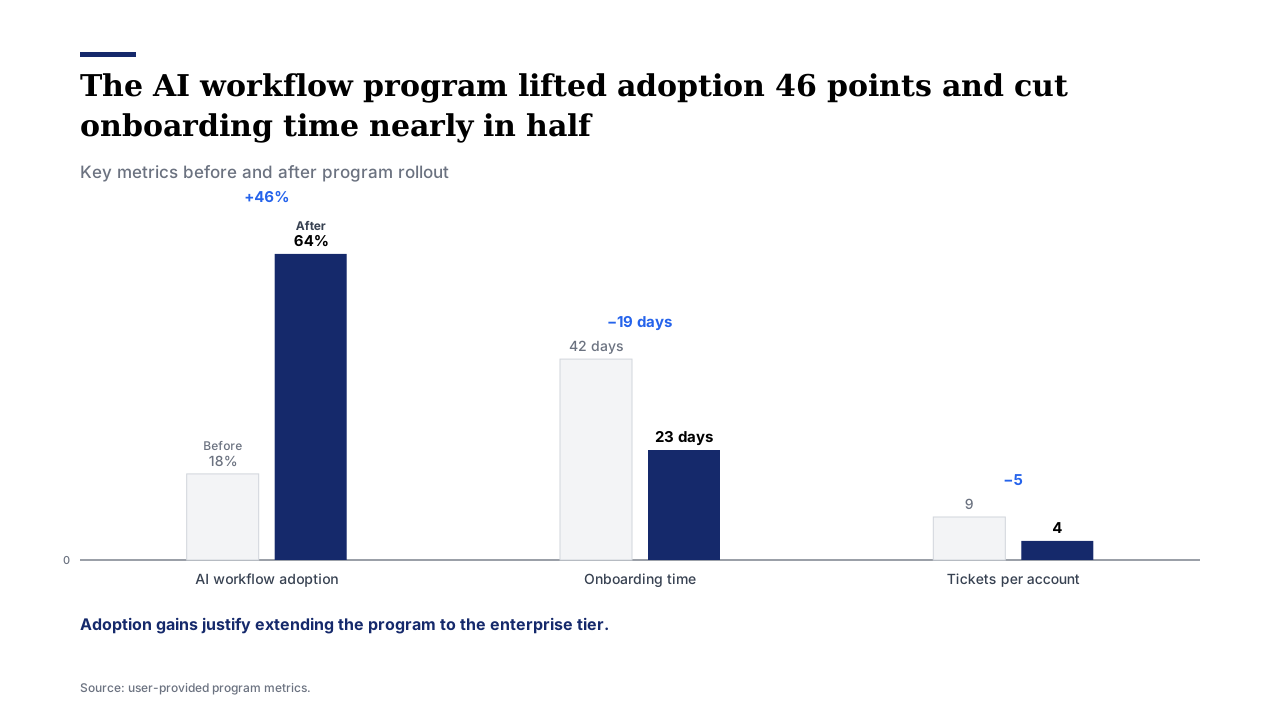
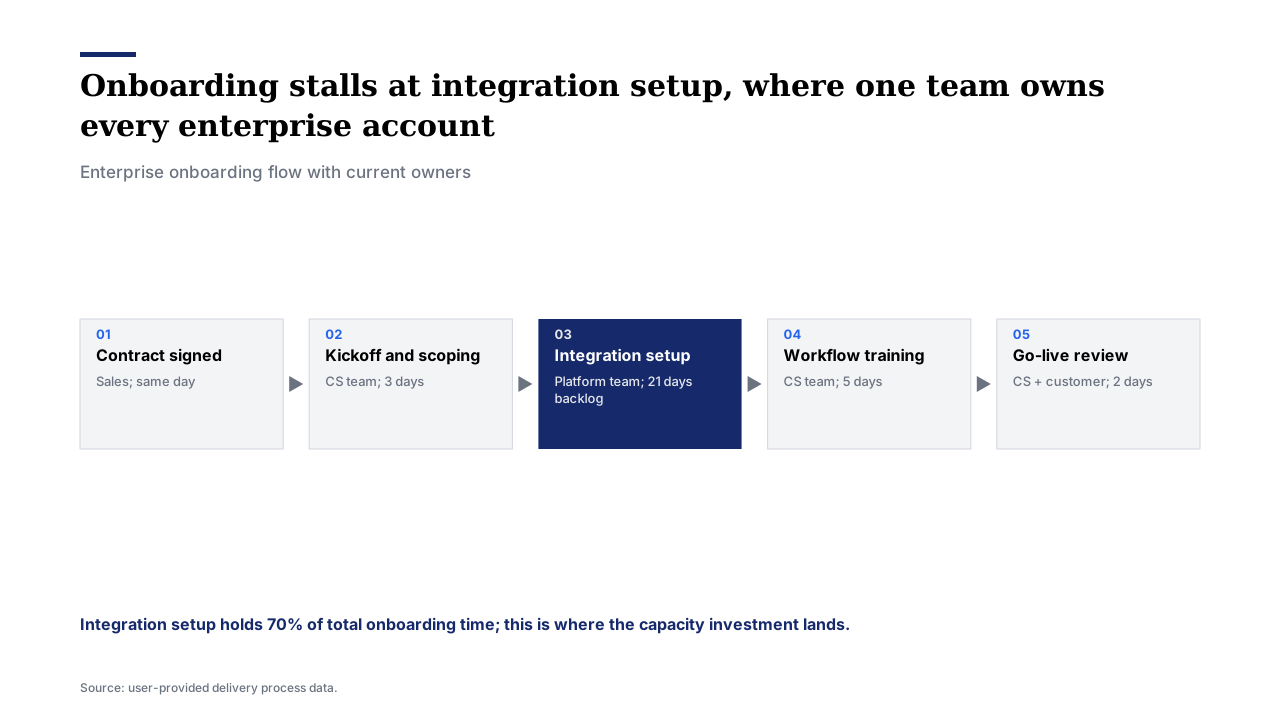
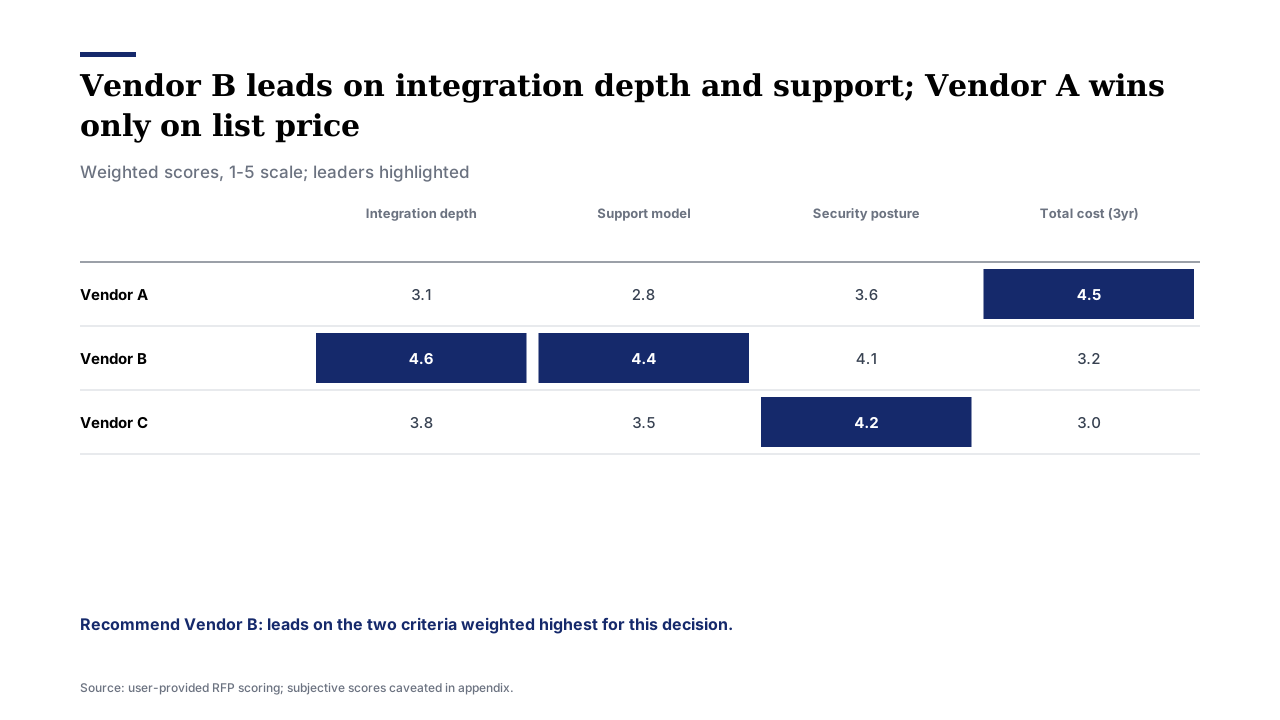
These are actual outputs of scripts/render_slide_spec.py, committed as-is. Spec JSON files live in examples/render-specs/.
| ARR Waterfall | Capacity Gap |
|---|---|
 |  |
| Before / After | Process Flow |
|---|---|
 |  |
| Benchmark Table | Executive Summary Strip |
|---|---|
 | 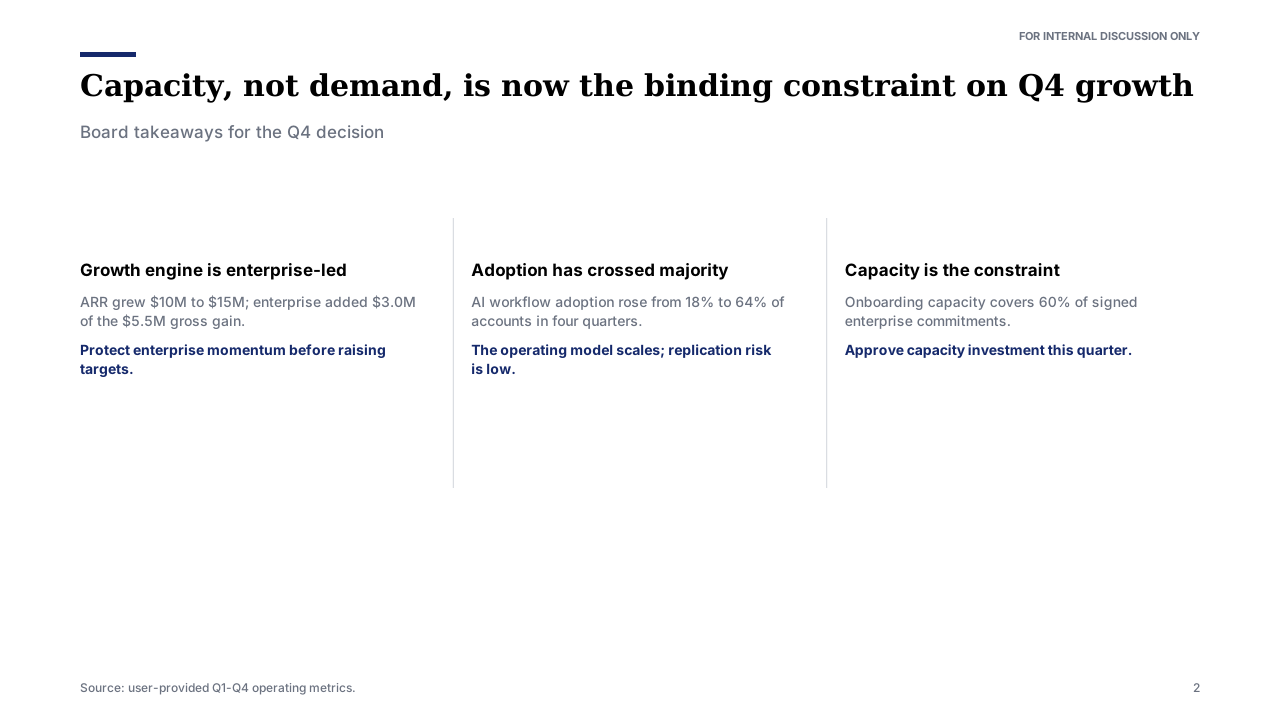 |
| Adoption Trend |
|---|
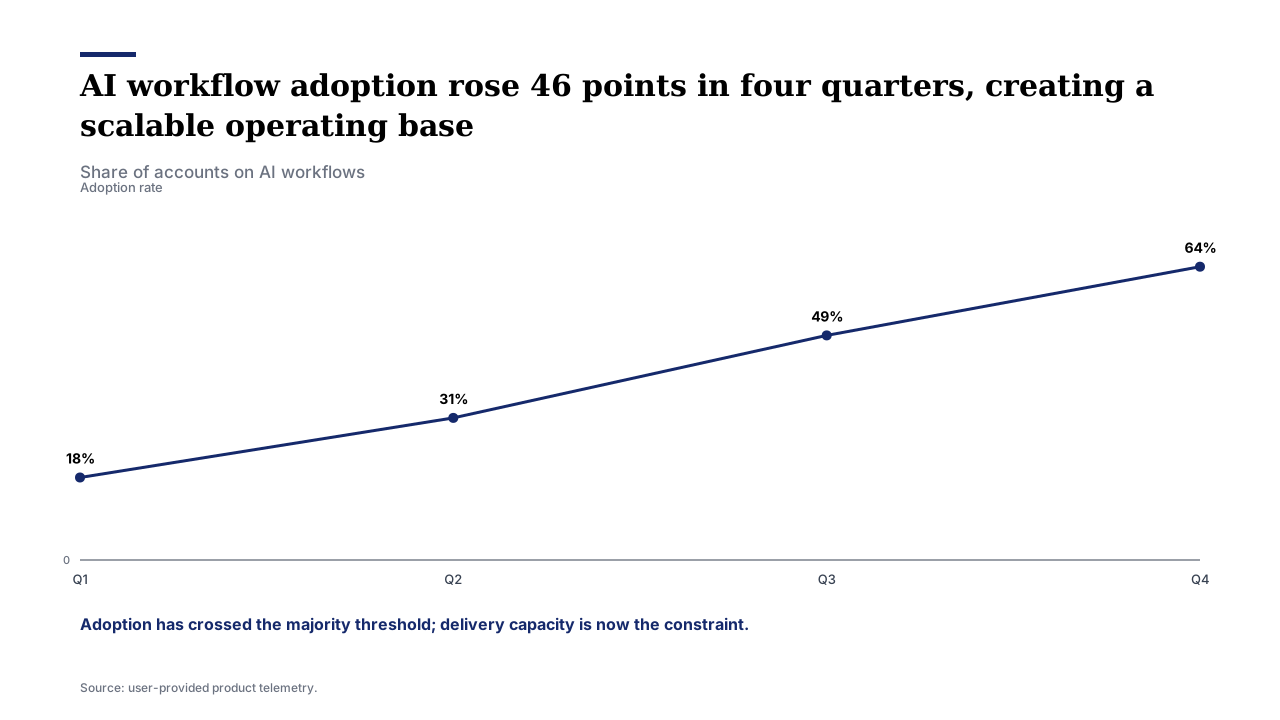 |
Supported render patterns: waterfall, gap, before_after, time_series, benchmark_table, summary_strip, process_flow, funnel, heatmap, gantt, kpi_scorecard, two_by_two. Other patterns ship as slide specs and image-generation prompts.
The persona playbook gives every role a copy-paste prompt and a rendered example:
| Role | Ask For | Rendered Example |
|---|---|---|
| Sales | Pipeline QBR, proposal visuals | 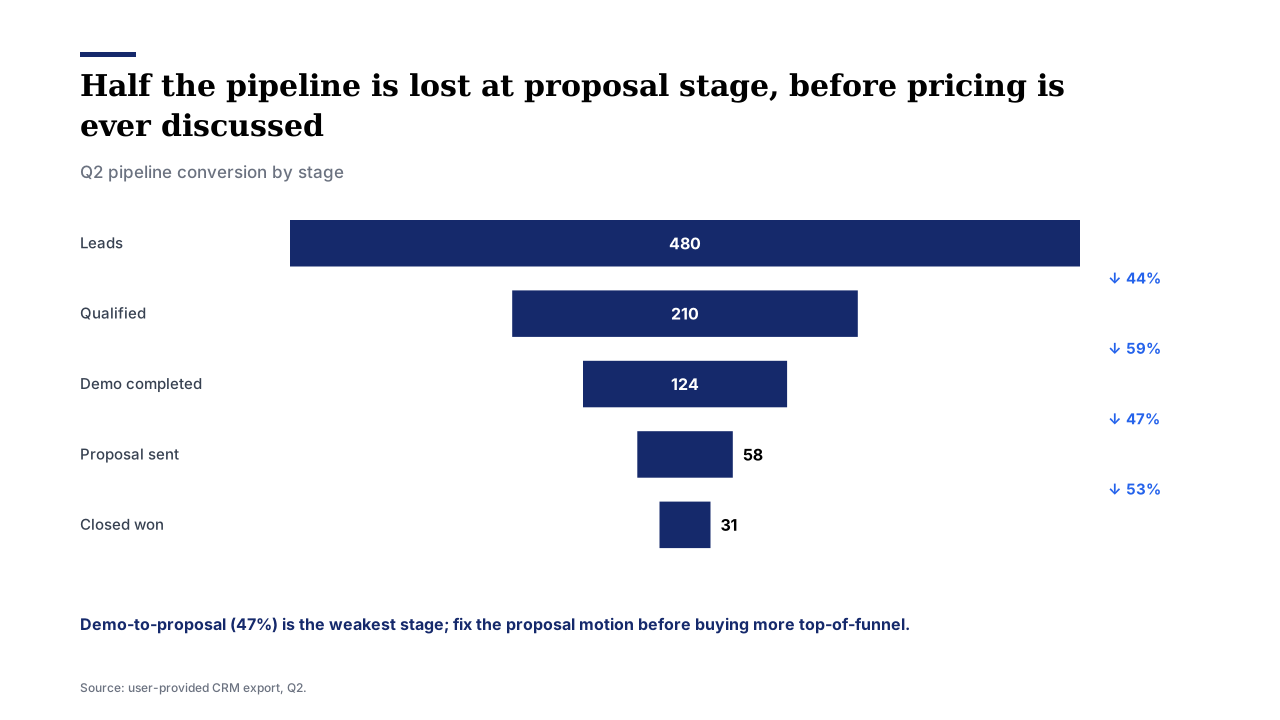 |
| Project manager / PMO | Roadmap with critical path | 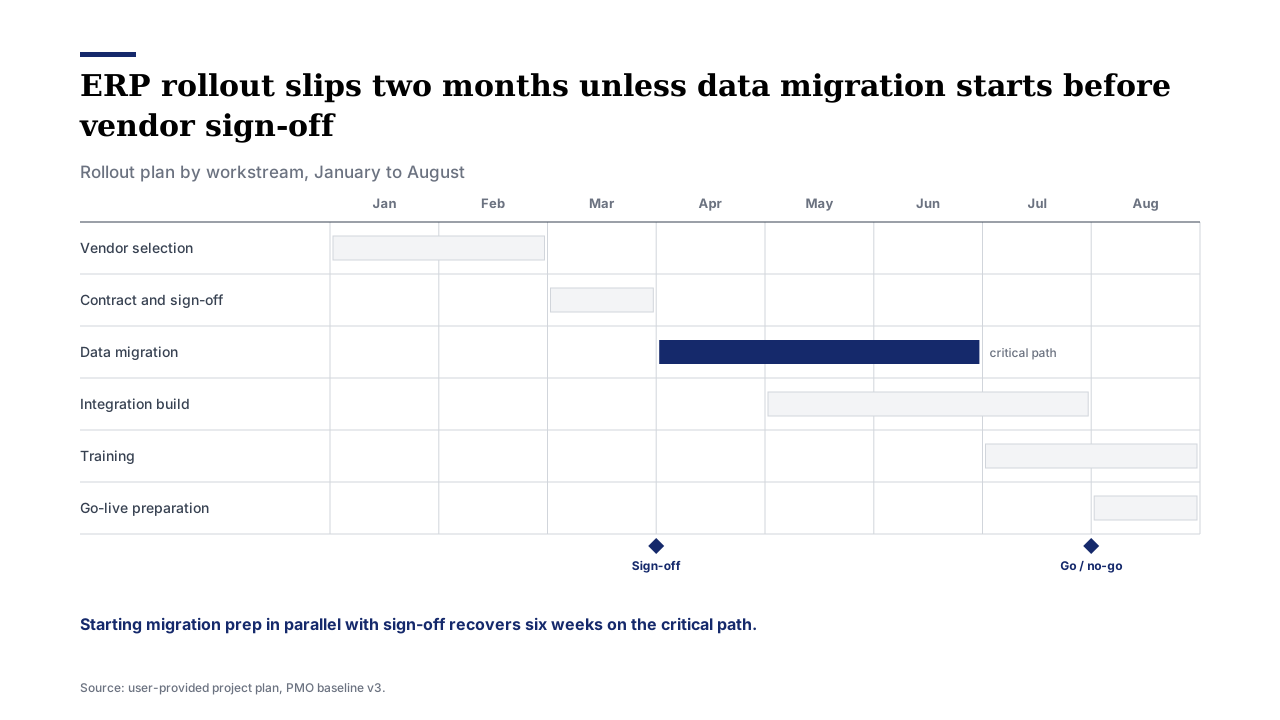 |
| Marketing | Channel x segment performance | 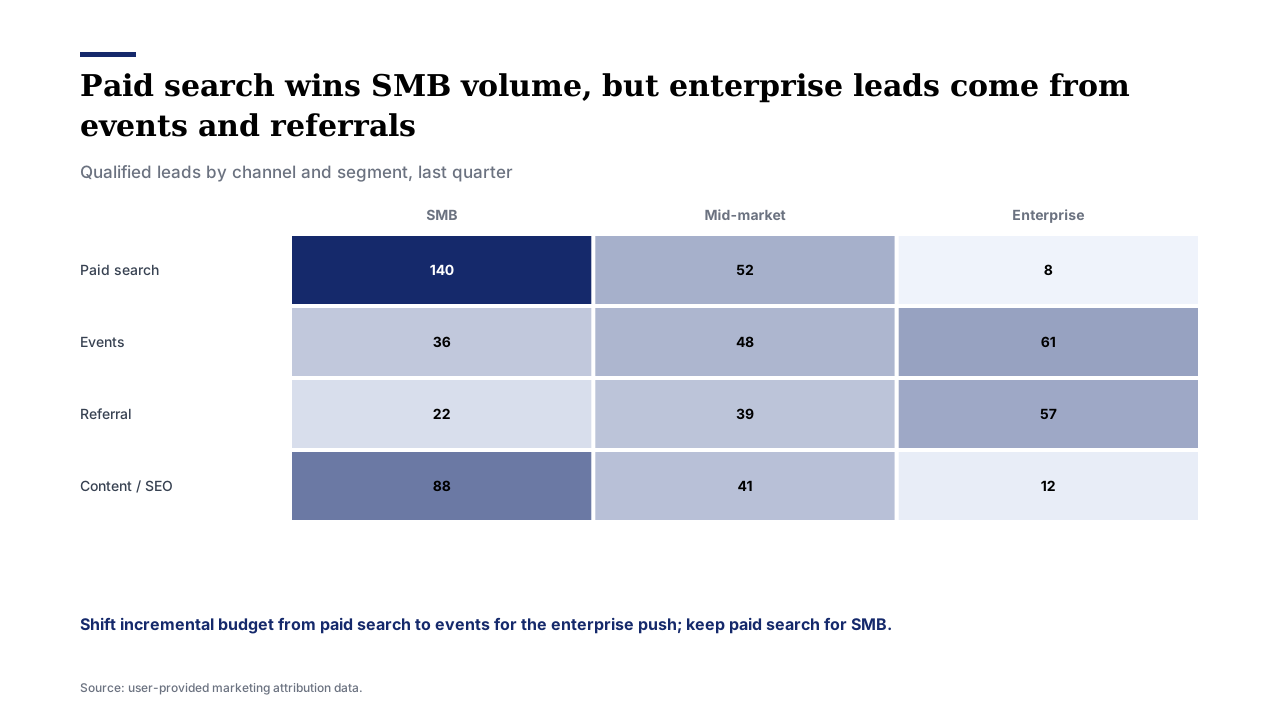 |
| HR / People ops | Talent scorecard | 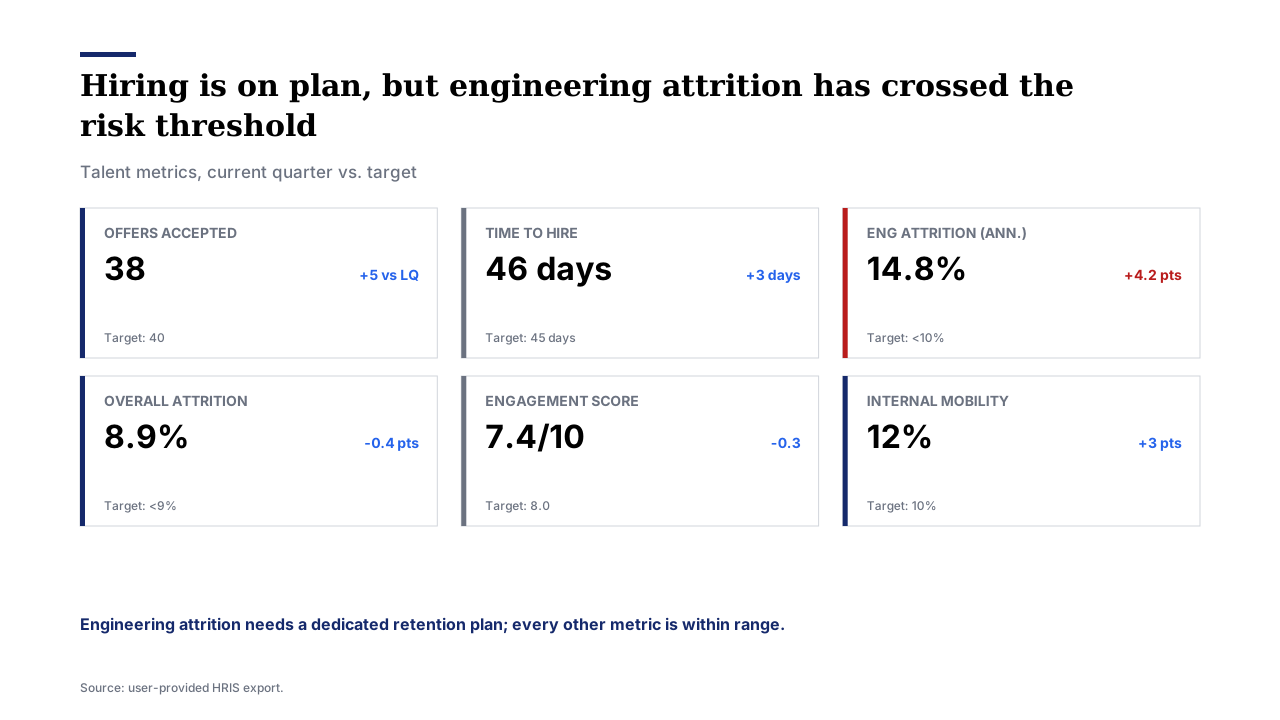 |
| Product manager | Effort vs. impact prioritization | 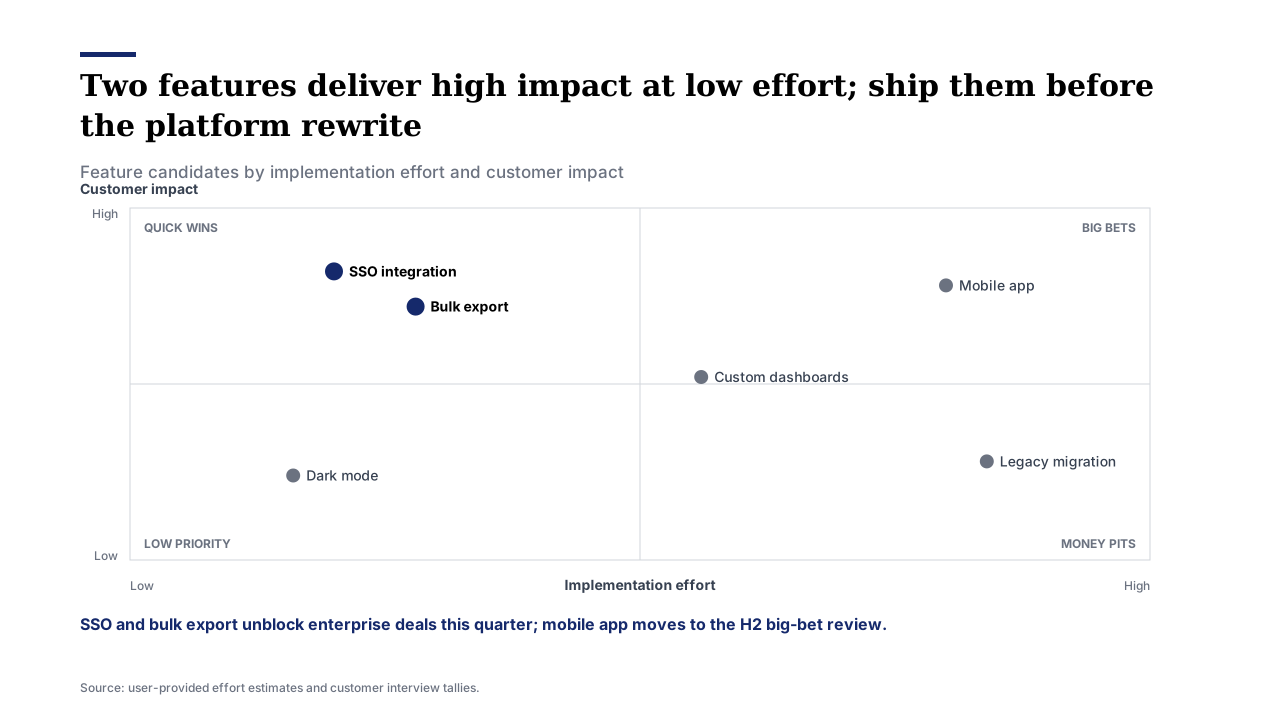 |
| Engineer / Tech lead | Incident postmortem flow | 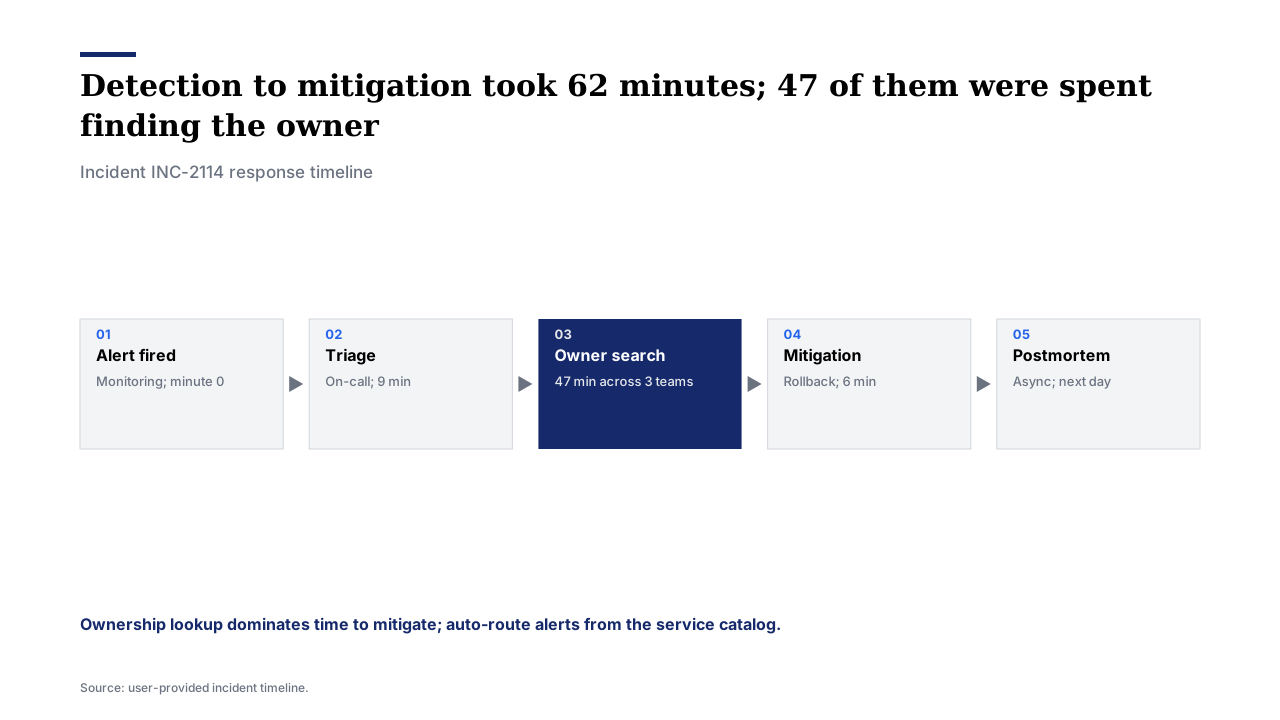 |
| Researcher / Clinician | Study outcome summary | 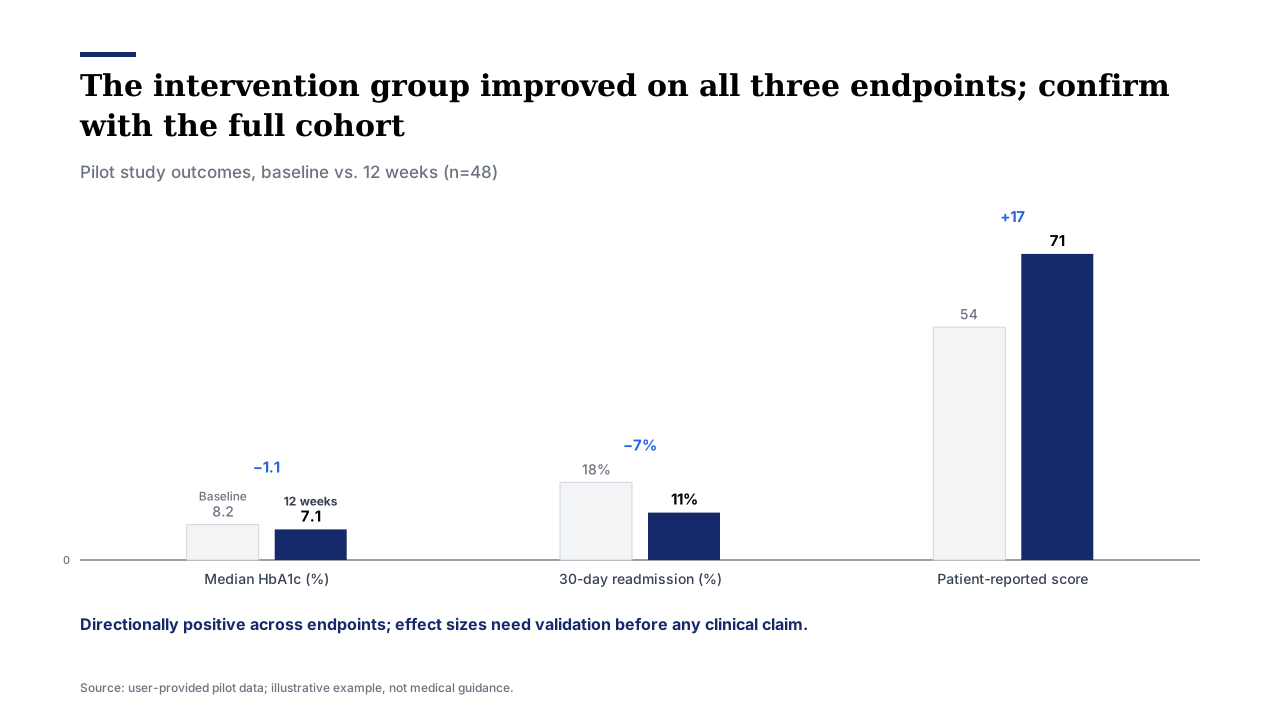 |
Finance and executive examples live in the gallery above. Japanese business formats (稟議書, 週報, 学会抄録, 提案書) have dedicated profiles in document-type-profiles.md.
Use this skill when you have messy business notes, metrics, or a strategic question and need a slide-ready consulting visualization direction.
| Starting Point | Ask For | You Get |
|---|---|---|
| Board update metrics | Executive board update story | 5 slide specs: cover, revenue waterfall, adoption trend, capacity gap, recommendation |
| Revenue bridge data | Waterfall chart | Start value, drivers, end value, labels, assumptions, and visual hierarchy |
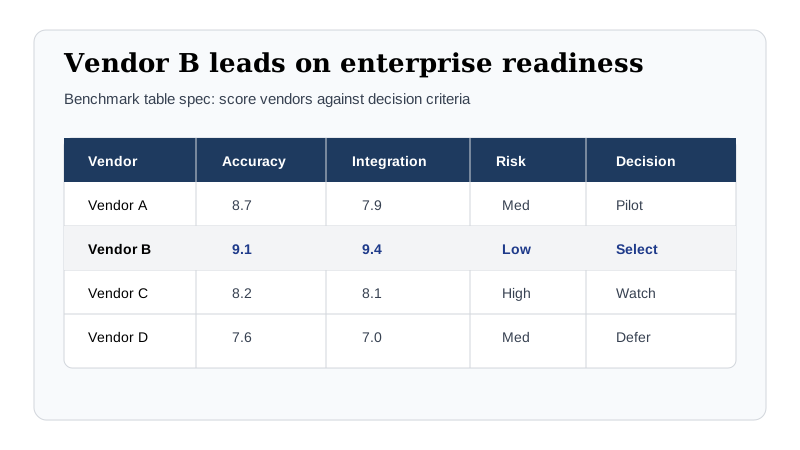
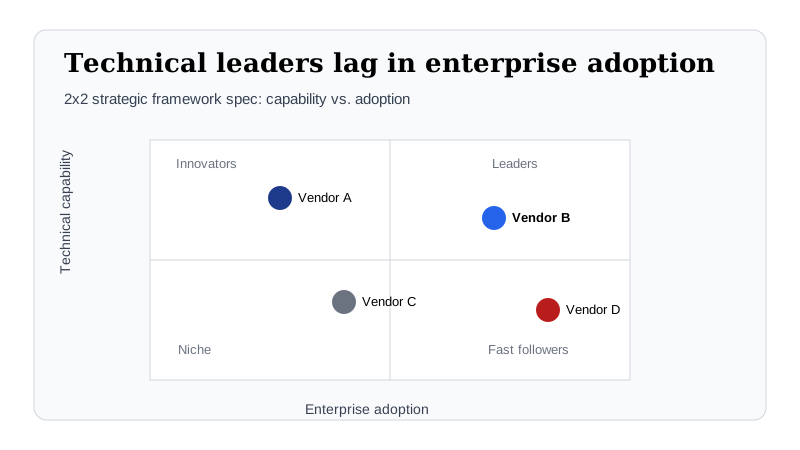
| Competitor or vendor data | Competitive benchmark | Ranked table, 2x2 positioning map, leader highlights, caveats |
| Market entry notes | Market analysis visual | country contrast, opportunity gap, timeline, investment comparison |
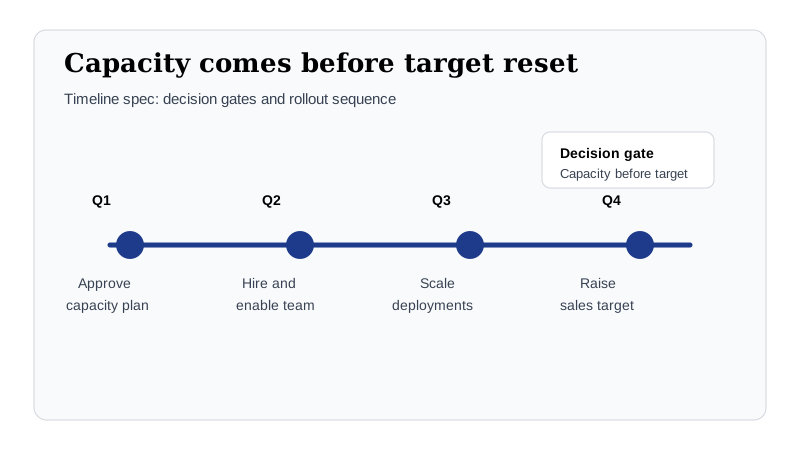
| Product milestones | Strategy timeline | milestone nodes, decision gates, rollout sequence, risk annotations |
| KPI before/after data | Impact slide | before/after comparison, delta labels, implication headline |
| Raw deck outline | Executive summary strip | 3-5 decision-ready takeaways with proof points and implications |
| Process description or SOP | Process flow or decision tree | Steps, owners, decision gates, and the bottleneck to fix |
| Research notes or whitepaper draft | Report figure plan | Numbered figures with sources, distributions, and methodology flow |
| Lesson or tutorial content | Training visual sequence | One-concept-per-visual flow, concept maps, before/after examples |
| Any prose, notes, or messy input | "Visualize this" | Input triage to the right pattern, document profile, and visual spec |
Since v1.6.0 the skill generalizes to any document type and any input:
The skill creates slide specs, image-generation prompts, and rendered SVG slides (via scripts/render_slide_spec.py for seven patterns). The value is in turning business input into a reproducible visual plan that an agent, designer, or renderer can execute.
These previews show the kind of artifact the skill helps an agent plan. They are lightweight README visuals, not final PowerPoint exports.
| Board Update Story | Visual Pattern Selection | Slide Spec Output |
|---|---|---|
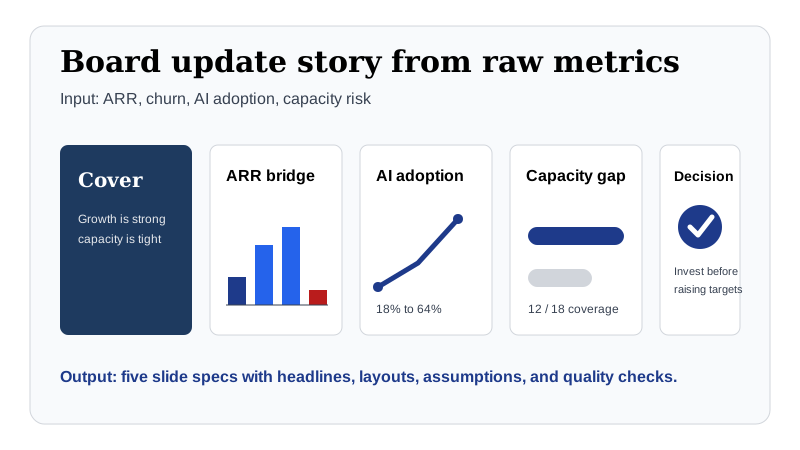 | 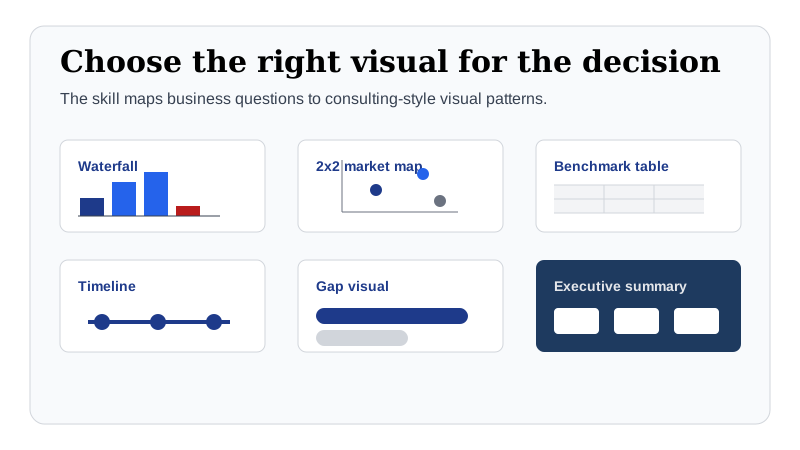 | 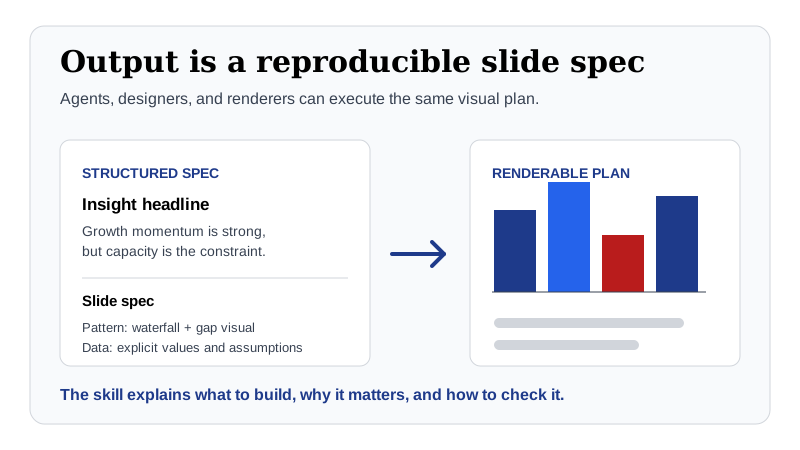 |
The skill can plan many kinds of board-ready strategy visuals. These examples show the visual direction a generated slide spec can describe.
| ARR Waterfall | Competitive Benchmark |
|---|---|
 |  |
| 2x2 Market Map | Strategic Timeline |
|---|---|
 |  |
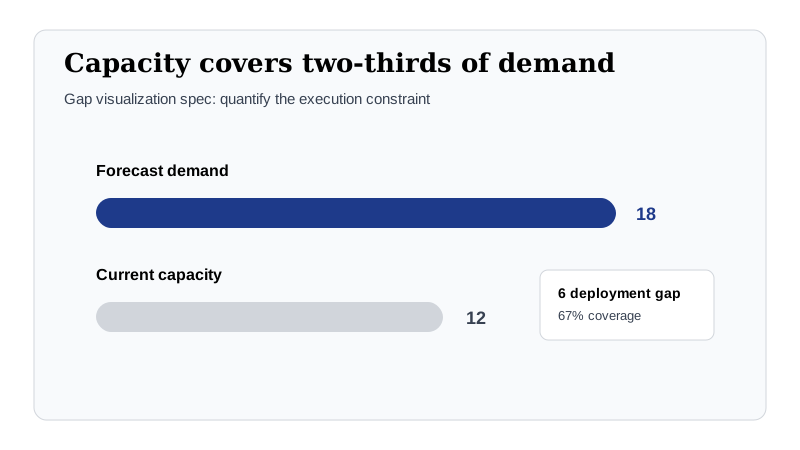
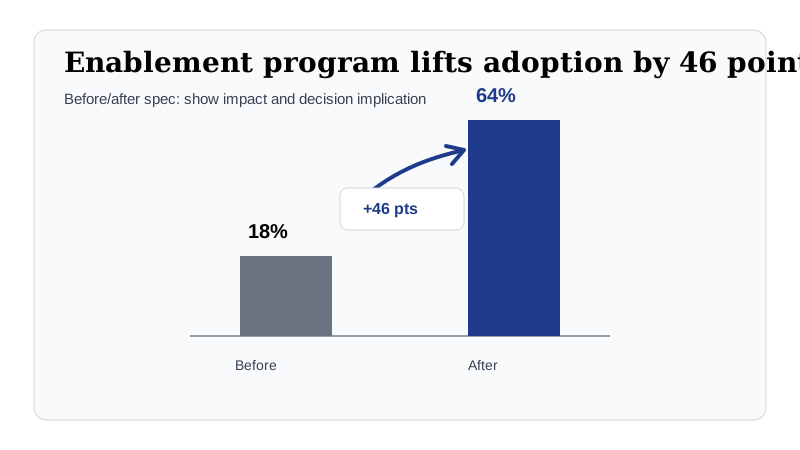
| Capacity Gap | Before / After Impact |
|---|---|
 |  |
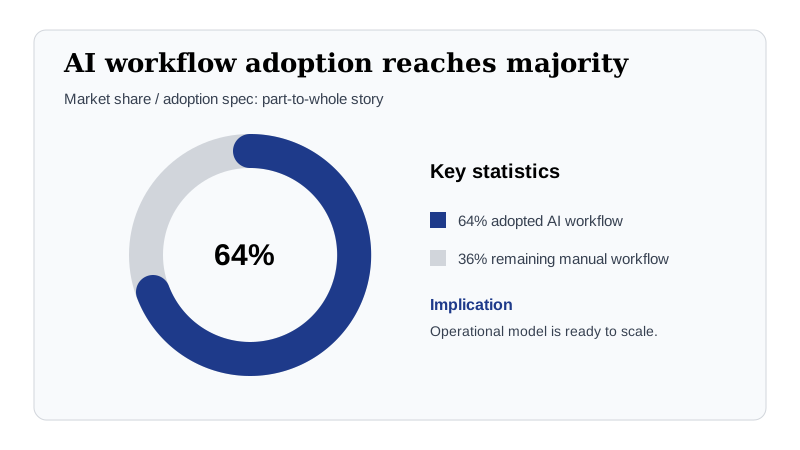
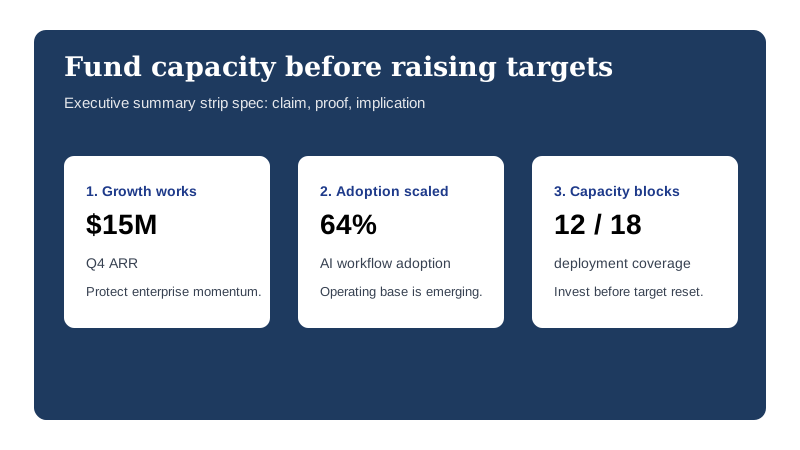
| Market Adoption | Executive Summary Strip |
|---|---|
 |  |
| Market Entry Comparison |
|---|
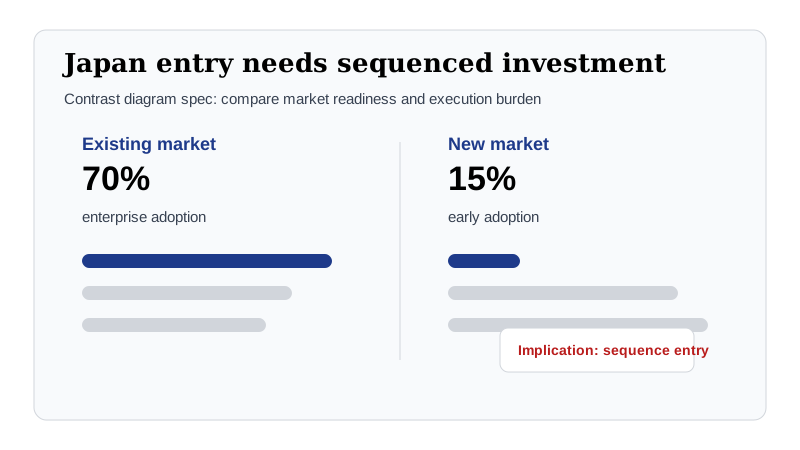 |
Give the skill this:
ARR grew from $10M to $15M.
Enterprise expansion contributed $3M.
Existing customer expansion contributed $2.5M.
Churn reduced ARR by $0.5M.
AI workflow adoption grew from 18% to 64%.
The board needs to decide whether to invest in implementation capacity.
It returns this kind of output:
Strategic question:
Should the board approve implementation capacity investment before raising enterprise targets?

Insight headline:
Growth momentum is strong, but implementation capacity is now the constraint on enterprise expansion.

Recommended visualization:
Five-slide board update: cover, ARR waterfall, AI adoption trend, capacity gap, executive recommendation.

Slide spec example:
Revenue Waterfall
- Start: Q1 ARR $10.0M
- Driver: +$3.0M enterprise new customers
- Driver: +$2.5M existing customer expansion
- Driver: -$0.5M churn
- End: Q4 ARR $15.0M
- Annotation: Net +$5.0M ARR; growth engine is enterprise-led.

Quality check:
Values reconcile, assumptions are explicit, and the recommendation is tied to the board decision.
For polished executive materials, the package now includes a repeatable review loop:
flowchart LR
    A["Public reference scan"] --> B["Original draft"]
    B --> C["Executive review"]
    C --> D["Revision"]
    D --> E["Rubric score"]
    E --> F{"18+/20 and no blockers?"}
    F -- "No" --> C
    F -- "Yes" --> G["Publishable slide spec"]
Use these files to run the loop:
Example loops:
| Scenario | Draft v1 | Review v1 | Draft v2 | Review v2 |
|---|---|---|---|---|
| Board update | draft | review | draft | review |
| Vendor selection | draft | review | draft | review |
| Investment memo | draft | review | draft | review |
| Market entry | draft | review | draft | review |
You can also run a lightweight structural review:
python3 scripts/review_slide_spec.py examples/review-loop/market-entry-draft-v2.md
This skill turns raw business input into a board-ready visualization spec. It is structured as a portable SKILL.md package with references, proof examples, marketplace metadata, and local validation.
flowchart LR
    A["Raw business notes"] --> B["Strategic question"]
    B --> C["Insight headline"]
    C --> D["Visualization pattern"]
    D --> E["Slide spec"]
    E --> F["Quality check"]
    F --> G["Marketplace-ready proof"]
| Layer | What It Does | File |
|---|---|---|
| Skill entrypoint | Tells agents when and how to use the skill | SKILL.md |
| Input triage | Maps any input to a pattern family | input-triage.md |
| Document profiles | Adapts format and tone per deliverable | document-type-profiles.md |
| Pattern library | Selects the right executive visual | visualization-patterns.md |
| Style system | Defines palette, typography, layout, and chart rules | style-system.md |
| Prompt templates | Converts decisions and data into reproducible specs | prompt-templates.md |
| Quality rubric | Scores strategy, data, hierarchy, portability, and safety | quality-rubric.md |
| Renderer | Turns spec JSON into styled SVG slides | render_slide_spec.py |
| Proof pack | Shows input, expected output, and evaluation | examples/ |
| Marketplace layer | Provides listing copy and metadata | MARKETPLACE.md / manifest.json |
| Validation | Checks package structure before publishing | validate_skill.py |
Most AI-generated business charts become generic dashboards or decorative slide art. This skill gives agents a stricter operating system for strategy-consulting visualization:
The skill returns a structured deliverable:
Strategic question
Insight headline
Recommended visualization
Slide spec
Data and assumptions
Quality check
The output is meant to be useful before rendering. A consultant, designer, agent, or slide-generation tool should be able to use the spec without reverse-engineering the intent.
flowchart TB
    subgraph Input["Input"]
        I1["Metrics"]
        I2["Business context"]
        I3["Decision to support"]
    end

    subgraph Skill["Skill workflow"]
        S1["Frame the decision"]
        S2["Choose pattern"]
        S3["Apply visual system"]
        S4["Write slide spec"]
        S5["Score with rubric"]
    end

    subgraph Output["Output"]
        O1["Board slide spec"]
        O2["Image-generation prompt"]
        O3["Assumptions and caveats"]
    end

    Input --> Skill --> Output
Core strategy patterns:
| Pattern | Best For | Example Decision |
|---|---|---|
| Time-series growth | Momentum, adoption, revenue, usage | Is growth accelerating? |
| Gap visualization | Current vs. target, leader vs. laggard | How large is the execution gap? |
| Before-after comparison | Intervention impact | Did the program justify investment? |
| Market share / adoption | Penetration and composition | Where is the center of gravity? |
| Investment / scale infographic | Capacity, spend, reach, operating scale | Who has the scale advantage? |
| Timeline | Rollouts, regulation, milestones | What must happen by when? |
| Contrast diagram | Region, strategy, or model comparison | Where is the structural difference? |
| 2x2 strategic framework | Positioning options or competitors | Which position is attractive? |
| Competitive benchmark table | Multi-criteria vendor or competitor review | Who leads on what matters? |
| Waterfall chart | Bridge, variance, cumulative change | What drove the delta? |
| Cover slide | Deck or section opening | What is the argument? |
| Executive summary strip | Compact board memo takeaway | What should leaders remember? |
Universal patterns for any document:
| Pattern | Best For | Example Question |
|---|---|---|
| Process flow | Workflows, SOPs, pipelines | What happens, in what order? |
| Funnel | Conversion, attrition, staged loss | Where do we lose the most? |
| Cycle diagram | Loops, feedback systems, habits | What sustains this loop? |
| Hierarchy / tree | Org charts, taxonomies, breakdowns | How is this organized? |
| Pyramid | Layered arguments, priorities, maturity | What is the foundation? |
| Concept / system map | Relationships, architectures, dependencies | How do the parts interact? |
| Gantt / roadmap | Workstreams, phases, dependencies | Are we on track? |
| Heatmap matrix | Intensity across two dimensions | Where are the hot spots? |
| Scatter / correlation | Two continuous variables | Do these move together? |
| Distribution chart | Spread, concentration, outliers | What is typical, what is extreme? |
| Stacked composition | Mix shifts across items or time | How is the mix changing? |
| KPI scorecard | Many metrics at a glance | What needs attention? |
| Decision tree | Branching logic, eligibility, escalation | Given my case, what do I do? |
| Flow / allocation | Quantity splits between stages | Where does the volume go? |
| Checklist / maturity grid | Completion or capability levels | What is the next level? |
| Annotated map | Geographic concentration | Where is this happening? |
git clone https://github.com/kgraph57/mckinsey-style-visualization-skill.git ~/.claude/skills/strategy-consulting-visualization
git clone https://github.com/kgraph57/mckinsey-style-visualization-skill.git .claude/skills/strategy-consulting-visualization
mkdir -p ~/.claude/skills/strategy-consulting-visualization
curl -o ~/.claude/skills/strategy-consulting-visualization/SKILL.md https://raw.githubusercontent.com/kgraph57/mckinsey-style-visualization-skill/main/SKILL.md
Clone the full repository for marketplace-quality behavior. The entrypoint references files in references/.
Run the local package check before publishing, listing, or submitting changes:
python3 scripts/validate_skill.py
Expected output:
OK: skill package passed validation
The validator checks the marketplace-critical pieces:
flowchart LR
    A["SKILL.md metadata"] --> V["validate_skill.py"]
    B["Required files"] --> V
    C["Manifest JSON"] --> V
    D["Proof examples"] --> V
    E["Stale URLs and risky claims"] --> V
    V --> F["Publishable package signal"]
Use the strategy consulting visualization skill to turn this board update into five slide specs:
- ARR grew from $10M to $15M over four quarters.
- Enterprise expansion contributed $3M.
- Churn reduced revenue by $0.5M.
- AI workflow adoption grew from 18% to 64%.
- Forecast risk is concentrated in implementation capacity.
See the proof set:
The proof pack shows how a future marketplace reviewer or buyer can inspect the asset quickly.
sequenceDiagram
    participant User as Business input
    participant Skill as Skill package
    participant Spec as Slide spec
    participant Rubric as Quality rubric
    participant Market as Marketplace reviewer

    User->>Skill: Provide board update notes
    Skill->>Spec: Generate five structured slide specs
    Spec->>Rubric: Score strategy, data, hierarchy, portability, safety
    Rubric->>Market: Provide evidence that the package is reviewable
.
├── SKILL.md
├── references/
│   ├── input-triage.md
│   ├── document-type-profiles.md
│   ├── style-system.md
│   ├── visualization-patterns.md
│   ├── prompt-templates.md
│   └── quality-rubric.md
├── examples/
│   ├── board-update-input.md
│   ├── board-update-slide-spec.md
│   └── evaluation-report.md
├── marketplace/
│   └── manifest.json
├── assets/
│   ├── readme/
│   └── social/
├── .github/
│   ├── ISSUE_TEMPLATE/
│   └── PULL_REQUEST_TEMPLATE.md
├── scripts/
│   ├── render_slide_spec.py
│   ├── review_slide_spec.py
│   └── validate_skill.py
├── MARKETPLACE.md
├── MARKETPLACE_TARGETS.md
├── LAUNCH.md
├── BUYER_BRIEF.md
├── TRACTION.md
├── SECURITY.md
├── CHANGELOG.md
└── ROADMAP.md
| Readiness Area | Status | Evidence |
|---|---|---|
| Portable entrypoint | Ready | SKILL.md |
| Progressive loading | Ready | references/ |
| Proof examples | Ready | examples/ |
| Local validation | Ready | validate_skill.py |
| Marketplace metadata | Ready | manifest.json |
| Storefront copy | Ready | MARKETPLACE.md |
| Launch copy | Ready | LAUNCH.md |
| Listing targets | Ready | MARKETPLACE_TARGETS.md |
| Buyer diligence | Ready | BUYER_BRIEF.md |
| Traction tracking | Ready | TRACTION.md |
| Inquiry intake | Ready | .github/ISSUE_TEMPLATE |
| Security posture | Ready | SECURITY.md |
| Product roadmap | Ready | ROADMAP.md |
| Release history | Ready | CHANGELOG.md |
This package is designed to become:
flowchart TD
    A["Open skill package"] --> B["Marketplace listing"]
    B --> C["Proof gallery"]
    C --> D["Premium template pack"]
    D --> E["Renderer integration"]
    E --> F["SaaS or acquisition path"]
This is an independent skill package. It is not affiliated with, endorsed by, or sponsored by McKinsey & Company, Boston Consulting Group, Bain & Company, or any other consulting firm. Named firms may appear only as common style references or search terms.
MIT. See LICENSE.
1000+ skills curated from Anthropic, Vercel, Stripe, and other engineering teams
Agent harness performance optimization with skills, instincts, memory, and security
Design enforcement with memory — keeps your UI consistent across a project
Detects 37 AI writing patterns and rewrites text with human rhythm across 5 voice profiles