

Are you the author? Sign in to claim
Real-time multiplayer pixel art canvas showcasing WebRTC, WebSockets & AI-driven development. Systematically built from
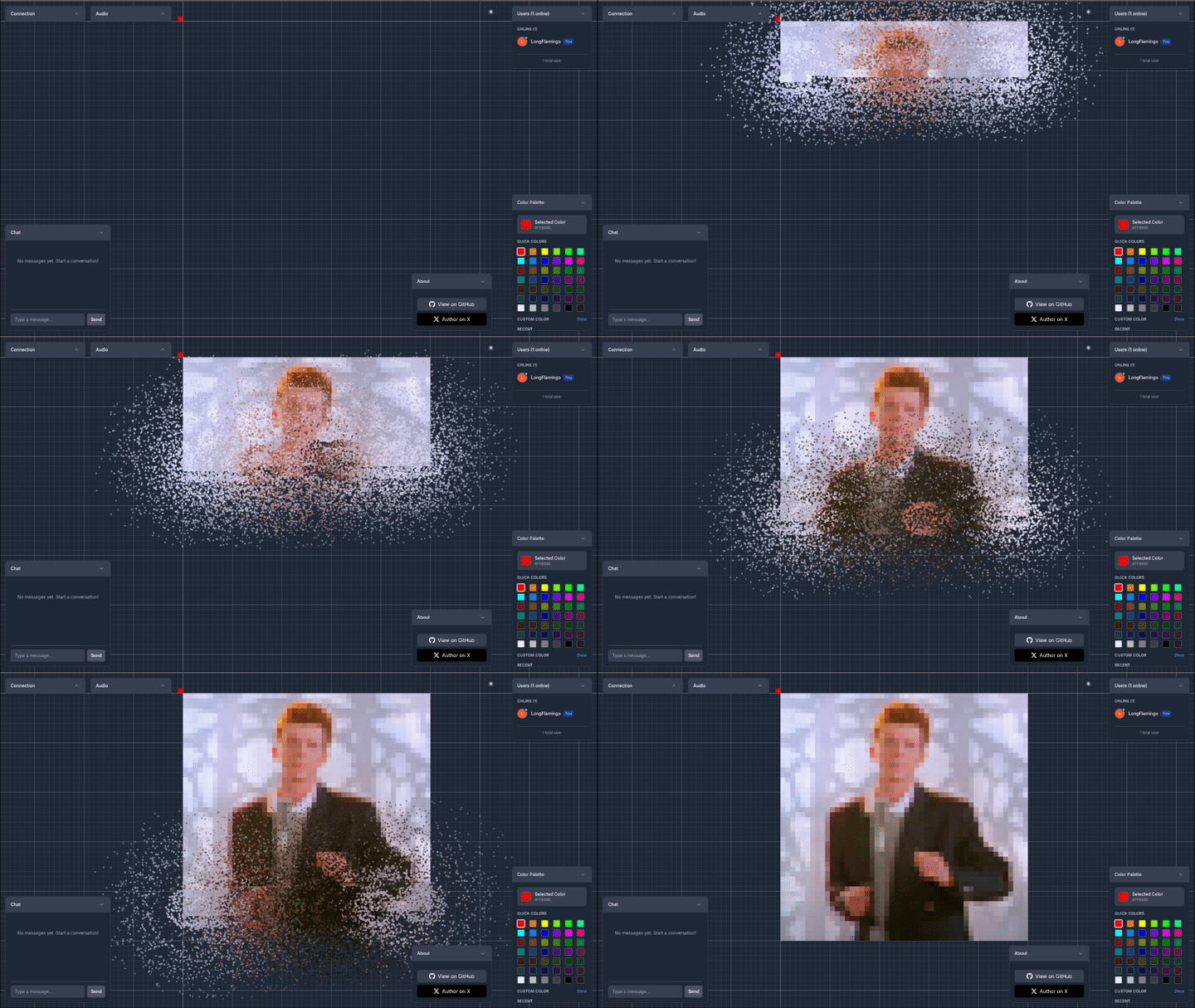
A web app where anyone can draw pixels on a shared canvas in real-time. Other people see your pixels appear instantly, you can see their cursors moving around, and there's a chat to talk while drawing. No signup required—just visit and start drawing.
🚀 Live Demo | Built with Nautex AI by Ivan Makarov
It's like a shared whiteboard but with pixels. You can:
Built to explore real-time web tech (WebRTC for cursors/chat, WebSockets for pixel updates) and test if AI can build complex apps from specifications alone.
graph TD
    subgraph "Client Layer"
        UI[React UI Components]
        Canvas[PixiJS Rendering Engine]
        WS[WebSocket Client]
        RTC[WebRTC P2P]
    end

    subgraph "Server Infrastructure"
        Proxy[Caddy Reverse Proxy]
        Backend[Backend Service<br/>Node.js + Express]
        Signaling[Signaling Service<br/>WebRTC Coordination]
        DB[(MongoDB<br/>Pixel & User Data)]
    end

    subgraph "Real-time Communication"
        WSConn[WebSocket<br/>Pixel Updates]
        RTCConn[WebRTC DataChannels<br/>Cursors + Chat]
    end

    UI --> Canvas
    Canvas --> WS
    WS --> WSConn
    RTC --> RTCConn

    WSConn --> Proxy
    RTCConn --> Proxy
    Proxy --> Backend
    Proxy --> Signaling
    Backend --> DB

    classDef frontend fill:#e1f5fe
    classDef backend fill:#f3e5f5
    classDef data fill:#e8f5e8
    classDef realtime fill:#fff3e0

    class UI,Canvas,WS,RTC frontend
    class Proxy,Backend,Signaling backend
    class DB data
    class WSConn,RTCConn realtime
Frontend
Backend
Infrastructure
This app was built by AI from start to finish. Here's how it worked:
Talked to Nautex AI chatbot about what I wanted to build
Refined the specifications in the Nautex app
Planned the file structure before any coding
Created coding tasks broken into small chunks
Exported everything and connected to Claude Code
Claude Code wrote all the code
What this approach gave us:
Two-channel approach: WebSockets for pixels (needs to be reliable), WebRTC for cursors/chat (needs to be fast)
Append-only pixels: Never delete pixel history, just track the latest one for each position
GPU rendering: PixiJS handles thousands of pixels smoothly, grid detail changes based on zoom level
No signup: Cookie-based sessions with random usernames - zero friction to start drawing
# Clone the repository
git clone <repository-url>
cd pix-canvas

# Start all services with Docker
make up

# Or run in development mode
make dev-frontend  # Terminal 1
make dev-backend   # Terminal 2
The application will be available at http://localhost:3000
# Run backend integration tests
make test-backend

# Run with watch mode for development
make test-backend-watch
Design enforcement with memory — keeps your UI consistent across a project
Create animation-rich HTML presentations using a coding agent's frontend skills
1000+ skills curated from Anthropic, Vercel, Stripe, and other engineering teams
Detects 37 AI writing patterns and rewrites text with human rhythm across 5 voice profiles