

Are you the author? Sign in to claim
An open-source text language, parser, validator and Three.js renderer for inspectable 3D human movement.
Kinematic motion as text.
Mermaid gave LLMs a way to draw diagrams.
Posecode gives them a way to show movement.
A human-readable spatial DSL for describing, validating, and rendering
exercises, physiotherapy movements, posture, dance, and human motion.
Live Playground · Movement Library · Language Specification · Examples · MCP Server




Ask an LLM to explain physical movement and it usually returns unstructured prose or a static diagram.
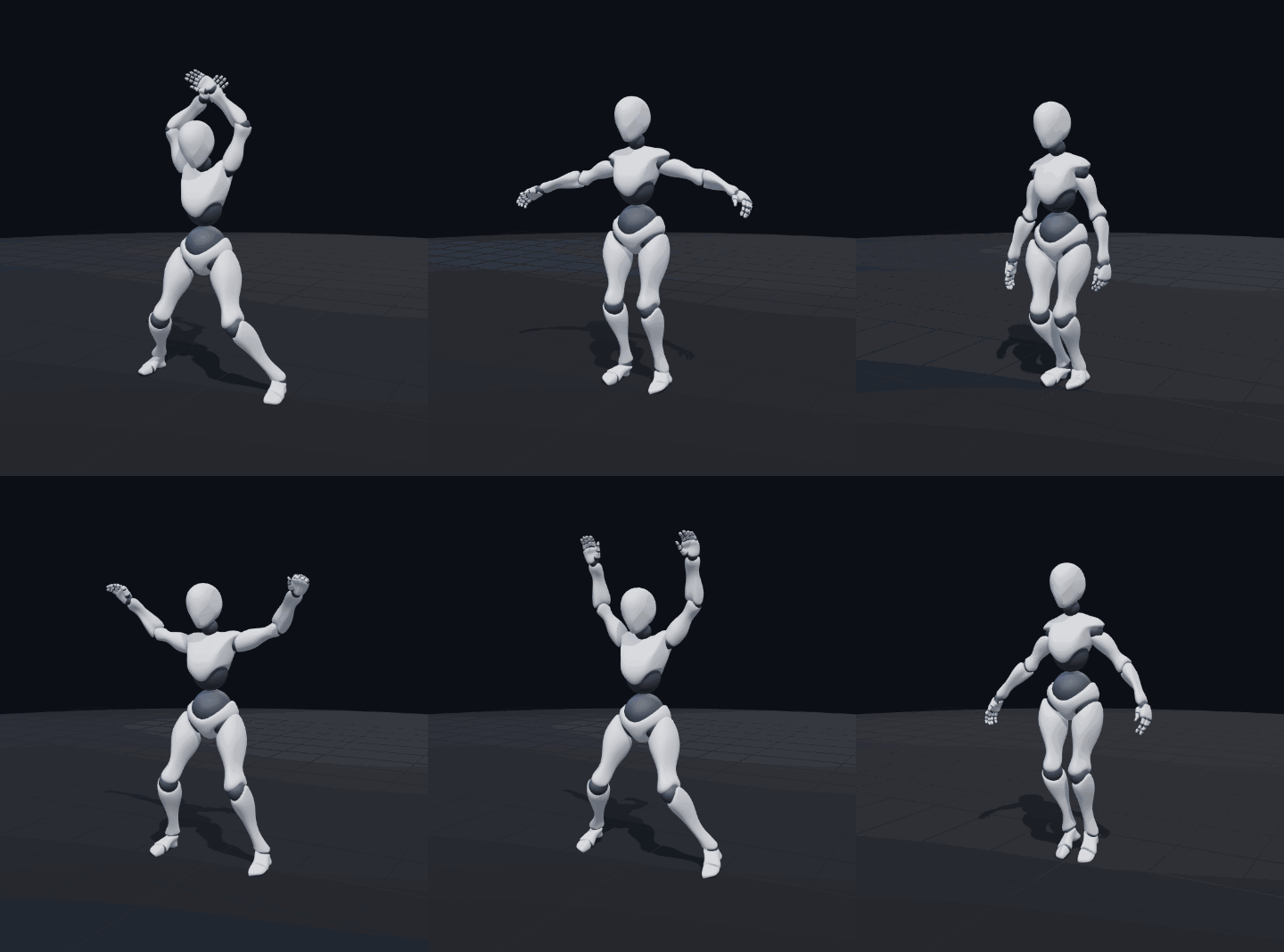
One .posecode document —
shoulders: abduct 160,
hips: abduct 30,
repeat 12 —
rendered live in the browser.
For example:
Bend your knees, move your hips backward, and keep your chest upright.
A human may understand that instruction, but a renderer cannot reliably determine:
Large language models can often reason about the components of human movement, but they lack a standardized syntax for expressing that reasoning in a renderable and testable form.
Posecode provides that missing representation.
From an LLM prompt to editable Posecode, validated 3D rendering, MCP tools, and a one-script web embed.
▶ Watch the 28-second builder demo
Plain text in. Smooth, programmable 3D motion out.
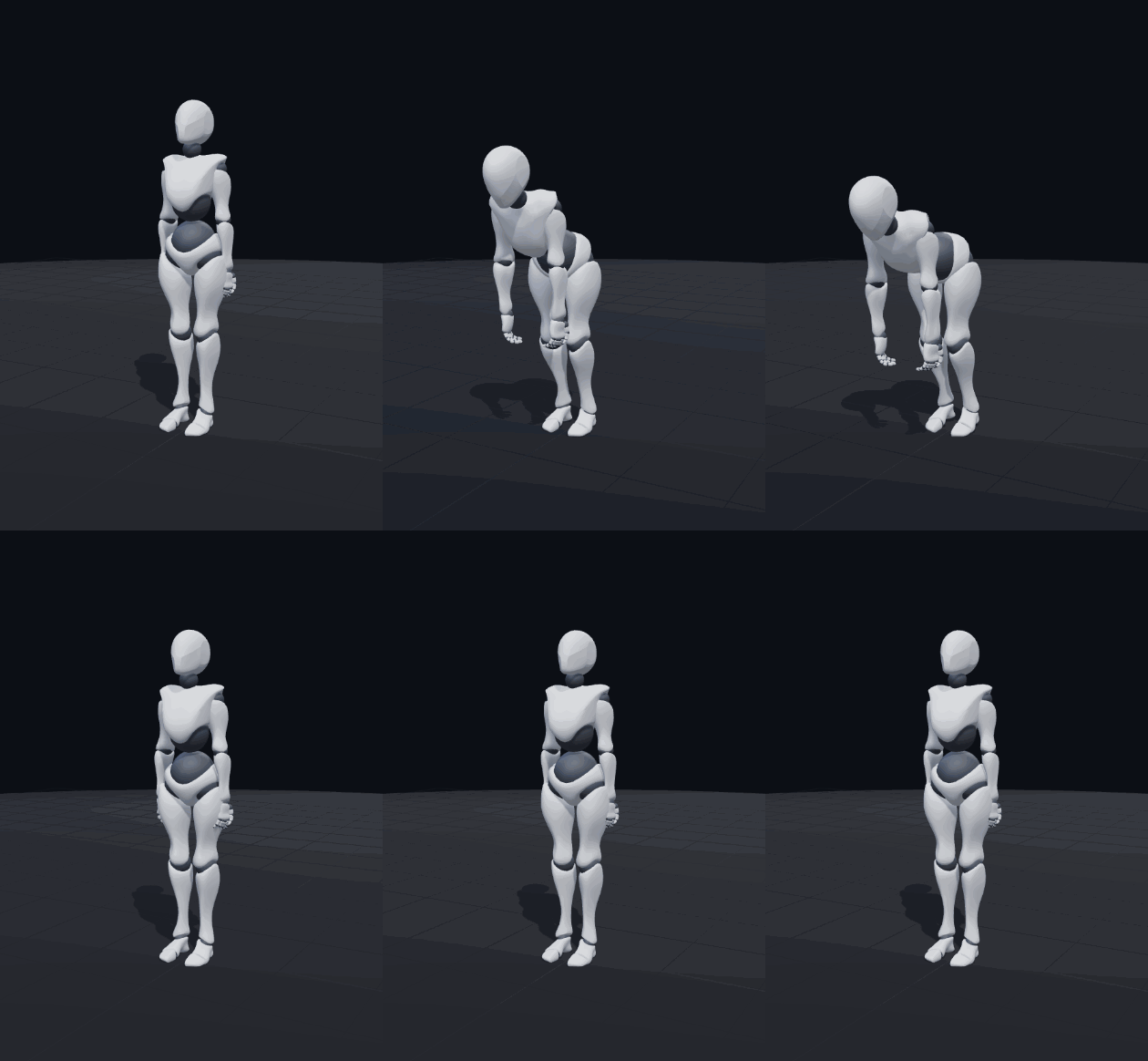
pelvis: hinge — deadlift
|
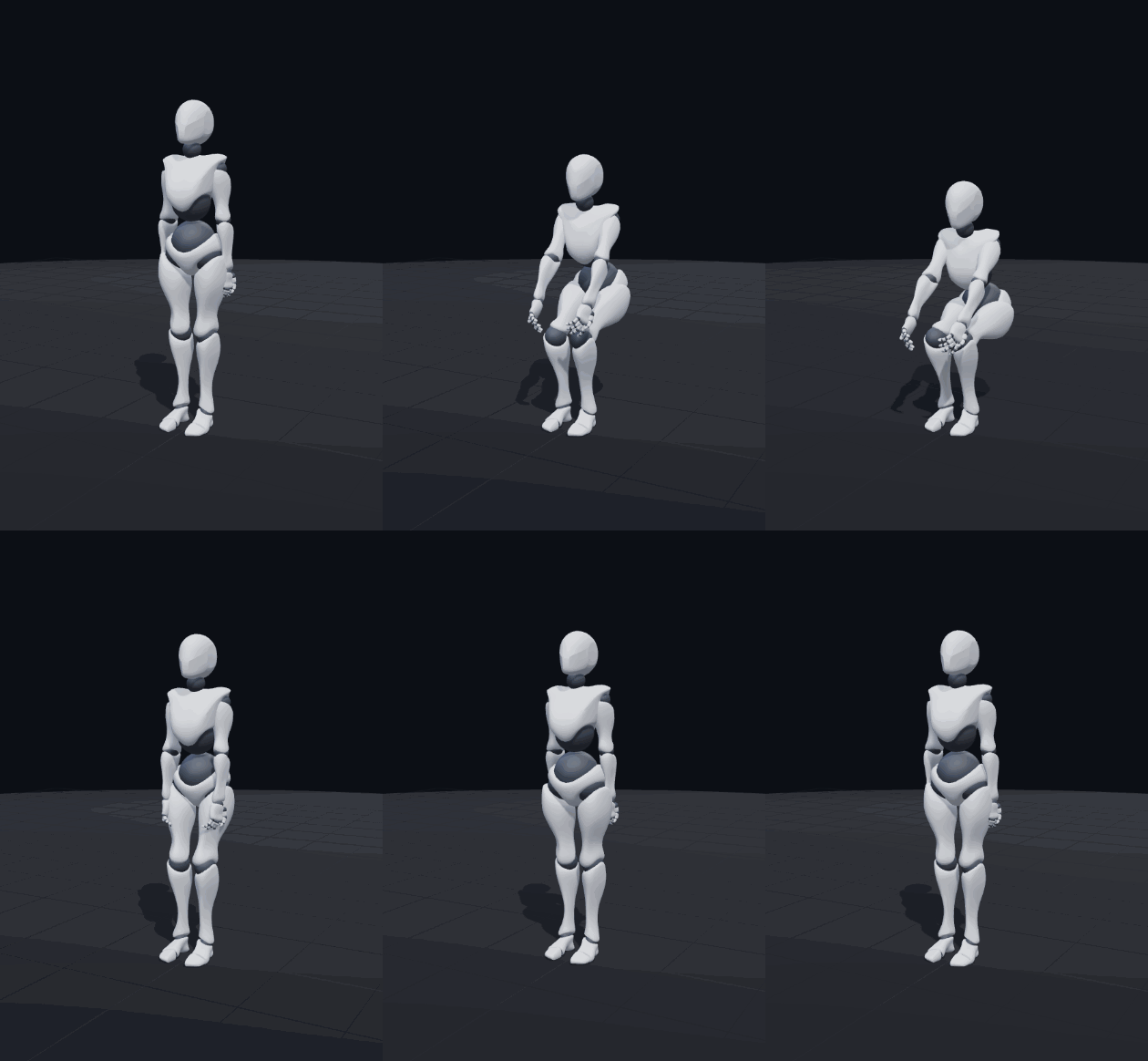
knees: flex 95 — squat
|
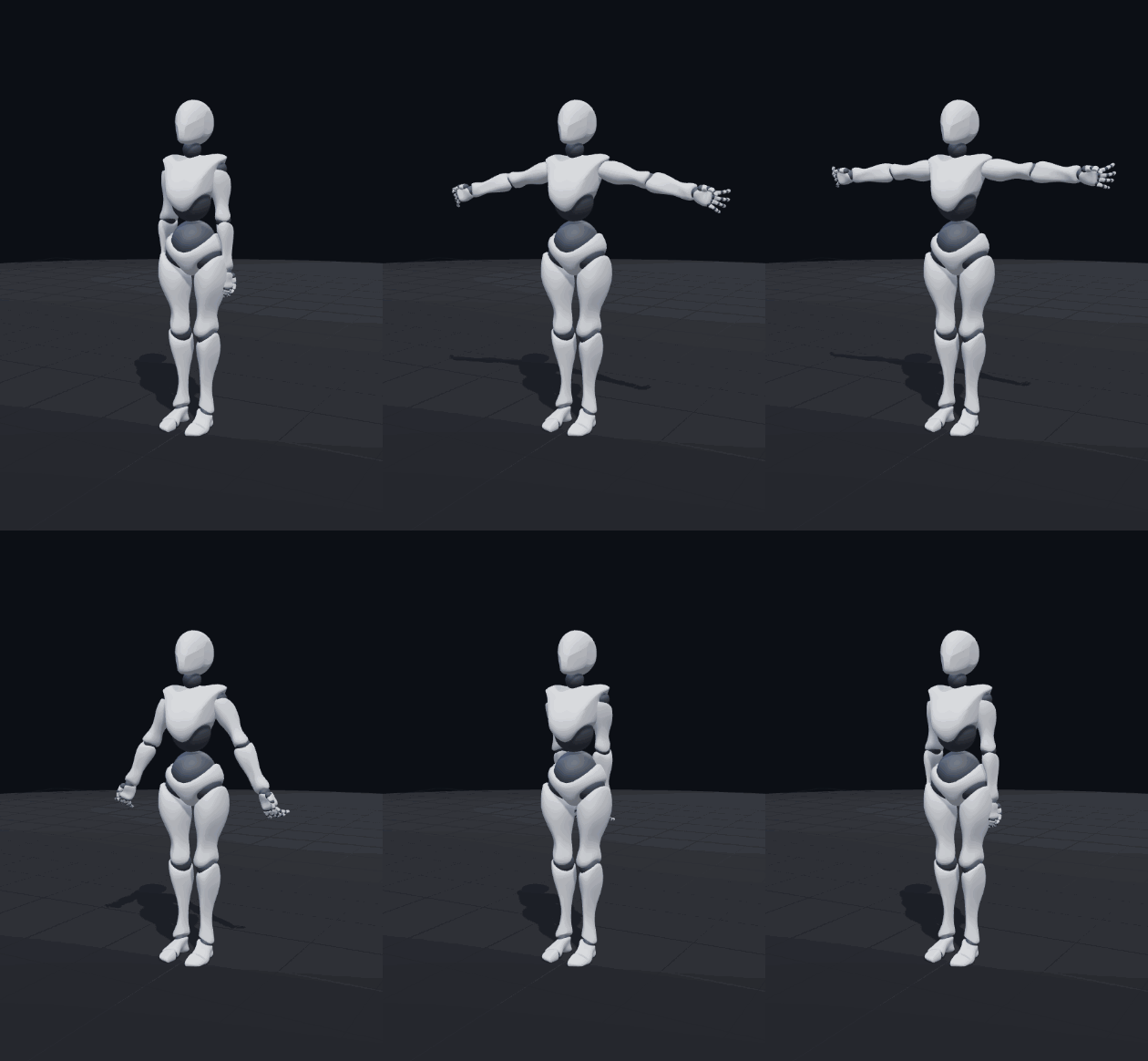
shoulders: abduct 90 — lateral raise
|
Neural text-to-motion systems can generate impressive movement, but they introduce problems for lightweight, programmable applications.
Many systems require large models and GPU-backed inference, making real-time consumer deployment expensive.
They usually produce coordinate trajectories rather than editable semantic instructions.
It is difficult to request a precise change such as:
Reduce knee flexion by 10 degrees during the second phase.
Black-box trajectories do not naturally expose readable joint rules, phase definitions, or range-of-motion limits.
When a movement looks wrong, developers may not know which semantic instruction caused the problem.
Posecode uses a lightweight, text-driven pipeline.
.posecode documents.A .posecode file describes movement as timed phases with targeted joint actions.
1. Write .posecode | 2. Render the movement |
|---|---|
posecode exercise "Body-weight squat"rig humanoidpose start = standingstep "Descend" 1.6s settle:hips: flex 80knees: flex 95ankles: dorsiflex 14ground-lock: feetcue "Sit the hips back"step "Drive up" 1.2s drive:hips: flex 0knees: flex 0ankles: dorsiflex 0ground-lock: feetrepeat 8 | |
OpenAI Build Week 2026: Posecode existed before the hackathon. During Build Week, the project was extended using Codex — running on GPT-5.6 — as the primary engineering tool for a real batch of shipped work: motion/grounding quality, language contract diagnostics, licensing restructuring, release automation, and product-facing pages. The sections below distinguish previous work from Build Week work using actual commit history, not a roadmap.
Before Build Week, Posecode already included:
.posecode domain-specific language,This original version was developed primarily with Claude as an AI-assisted engineering tool.
That prior work provides the foundation for the project, but it is not presented as the new hackathon contribution.
Every item below is a merged, dated pull request built with Codex (GPT-5.6) — see Build Week Evidence for direct links.
drive/settle/flow/snap), a parser validation CLI, and embed compatibility metadata (#62)./for-products page documenting the web component, parser, renderer, and MCP server for integrators (#82, #74).During Build Week, Codex sessions ran on GPT-5.6 (GPT-5.6 Terra), which is the model that powers Codex for this event. GPT-5.6 is the reasoning engine behind every Build Week change listed above: reading the existing monorepo, proposing the ROM-constrained IK and contact-surface design in #76, designing the language/IR v0.3 diagnostics in #92, and drafting the licensing boundary in #84.
A GPT-5.6-powered natural-language-to-Posecode generation feature (describe a movement in plain English, get a validated .posecode document back) is a natural next step given the existing posecode_authoring_guide MCP tool, but it is not yet built — it is not claimed as shipped functionality here.
Codex is the primary engineering tool used for the Build Week extension.
During the hackathon period, Codex was used to:
Codex accelerates implementation, but the project remains human-directed. The following decisions were reviewed and selected manually: DSL semantics, system architecture, licensing boundaries, biomechanical constraints, validation policy, user experience, and acceptance or rejection of generated code.
The Build Week workflow follows this process:
npm run eval).All Build Week work is public, dated, and directly linked below — no placeholders.
| PR | Merged | What it did |
|---|---|---|
| #62 | 2026-07-15 | Posecode 0.2 timing vocabulary, validation CLI, embed compatibility |
| #61 | 2026-07-15 | Per-side ground-lock validation |
| #65 | 2026-07-16 | Google Search indexing fix |
| #66 | 2026-07-16 | npm + MCP Registry release automation |
| #64 | 2026-07-16 | Back ground-lock for supine movements |
| #74 | 2026-07-16 | /for-products integration page |
| #76 | 2026-07-17 | Motion/grounding overhaul: ROM-constrained reach IK, contact surfaces |
| #78 | 2026-07-17 | Mobile viewer sizing and natural hand orientation |
| #82 | 2026-07-17 | LLM-first landing page redesign |
| #84 | 2026-07-17 | Apache-2.0 / AGPL-3.0 licensing restructure |
| #92 | 2026-07-19 | Language/IR v0.3, grounding/self-collision diagnostics, floor guide |
| Before Build Week | Added during Build Week |
|---|---|
| Core Posecode DSL | Language/IR v0.3 custom start-pose blocks |
| Basic ROM clamping | Grounding, self-collision, and floor-guide diagnostics |
| Working IK/grounding | ROM-constrained reach IK with semantic contact surfaces |
| Single license file | Apache-2.0 / AGPL-3.0 layered licensing with commercial path |
| Manual publishing | Automated npm + MCP Registry release pipeline |
| Editorial landing page | LLM-first landing page + /for-products integration page |
| Existing tests | New diagnostics, IK, and licensing regression tests |
┌─────────────────────────┐
│ Natural-language prompt │
└────────────┬────────────┘
             │
             ▼
┌─────────────────────────┐
│ GPT-5.6 authoring layer │
└────────────┬────────────┘
             │
             ▼
┌─────────────────────────┐
│     .posecode source    │
└────────────┬────────────┘
             │
             ▼
┌─────────────────────────┐
│ Parser and ROM checking │
└────────────┬────────────┘
             │
             ▼
┌─────────────────────────┐
│ Kinematics and IK layer │
└────────────┬────────────┘
             │
             ├─────────────────────┐
             ▼                     ▼
┌─────────────────────────┐  ┌──────────────────────┐
│ Three.js/WebGL renderer │  │ Fidelity measurements│
└─────────────────────────┘  └──────────┬───────────┘
                                        │
                                        ▼
                             ┌──────────────────────┐
                             │ GPT-5.6 Physics     │
                             │ Critic and revision │
                             └──────────────────────┘
Preview, edit, and share movements without installing anything:
Requirements:
Clone the repository:
git clone https://github.com/posecode-dev/posecode.git
cd posecode
Install dependencies:
npm install
Start the playground:
npm run dev
Run tests:
npm test
Run type checking:
npm run typecheck
Run fidelity evaluations:
npm run eval
Build the playground:
npm run build
A VS Code extension provides syntax highlighting, ROM diagnostics, and
completion for .posecode files — see
editors/vscode. Until it is published, you can
get basic highlighting immediately by associating .posecode files with
Markdown:
"files.associations": {
  "*.posecode": "markdown"
}
See the editor guide for VS Code, Cursor, Sublime Text, and Neovim instructions.
Posecode includes a Model Context Protocol server for AI agents.
Run it with:
npx -y posecode-mcp@latest
Example MCP client configuration:
{
  "mcpServers": {
    "posecode": {
      "command": "npx",
      "args": ["-y", "posecode-mcp@latest"]
    }
  }
}
The MCP server exposes:
validate_posecoderender_posecodeSee packages/posecode-mcp for the complete configuration and tool documentation.
Embed a Posecode player on a page:
<script src="https://unpkg.com/posecode-embed/dist/posecode-embed.js"></script>

<posecode-player src="/movements/squat.posecode"></posecode-player>
The player can be used in:
Install the parser:
npm install posecode-parser
Install the renderer:
npm install posecode-render
Example:
import { parse } from "posecode-parser";
import { createViewer } from "posecode-render";

const source = `
posecode exercise "Lateral raise"
  rig humanoid
  pose start = standing

  step "Raise" 1.4s settle:
    shoulders: abduct 90
`;

const { ir, errors, warnings } = parse(source);

if (!ir || errors.length > 0) {
  console.error(errors);
} else {
  console.warn(warnings);
  const viewer = createViewer(document.querySelector("#viewer"));
  viewer.load(ir);
  viewer.play();
}
The #viewer element is an HTML <canvas>.
posecode-render can bake a movement into a Biovision Hierarchy
(.bvh) file for import into Blender and other animation tools. In the
playground, use the Download BVH button; programmatically:
import { parse } from "posecode-parser";
import { exportBVH } from "posecode-render";

const { ir } = parse(source);
const bvh = exportBVH(ir!, { fps: 30 }); // string, ready to write to disk
Options: fps (default 30), scale (default 1 = metres; pass 100 for
centimetres), includeFingers (default false), and proportions for a
calibrated rig.
Zrotation Xrotation Yrotation (Euler order ZXY).reach: hand_left floor) export the authored pose rather than the
solved one. See issue #63.For web animation pipelines, posecode-render can export the rig and a
baked animation clip as a glTF/GLB asset. In the playground, use Download
glTF; programmatically:
import { parse } from "posecode-parser";
import { exportGLTF } from "posecode-render";

const { ir } = parse(source);
const glb = await exportGLTF(ir!);            // GLB ArrayBuffer (default)
const gltf = await exportGLTF(ir!, { binary: false }); // glTF JSON object
The result loads with Three.js GLTFLoader,
and the clip plays on the included rig:
const gltf = await new GLTFLoader().loadAsync(url);
const mixer = new THREE.AnimationMixer(gltf.scene);
mixer.clipAction(gltf.animations[0]).play();
posecode_root.Posecode uses multiple layers of checking.
Joint angles are constrained before rendering.
For example:
knees: flex 200
is clamped to the configured knee-flexion limit and produces a warning instead of rendering an impossible angle.
The engine measures the actual resulting skeleton after:
Movement examples can define expected properties.
For example, a deadlift may require:
The Build Week critic interprets the movement and deterministic measurements together.
It explains biomechanical problems in natural language and proposes specific revisions.
| Package | Purpose |
|---|---|
posecode-language | Language definitions and editor support |
posecode-parser | Converts .posecode text into a validated, range-constrained intermediate representation |
posecode-render | Renders animated figures with Three.js, forward kinematics, and IK |
posecode-share | Encodes Posecode documents into URL-safe share tokens |
posecode-mcp | Exposes Posecode capabilities to AI agents through MCP |
posecode-eval | Runs headless biomechanical and geometric fidelity evaluations |
playground | Interactive editor, 3D viewport, warnings, generation, critique, and sharing |
Posecode is built with:
Posecode currently focuses on:
The following are outside the current scope:
Posecode is an engineering and visualization project.
Its range-of-motion values and biomechanical checks are based on general reference data and simplified models.
They are not:
Generated movements should be reviewed by a qualified expert before being used for healthcare, rehabilitation, or safety-critical applications.
Posecode could support:
posecode/
├── packages/
│   ├── posecode-language/
│   ├── posecode-parser/
│   ├── posecode-render/
│   ├── posecode-share/
│   ├── posecode-mcp/
│   └── posecode-eval/
├── playground/
├── editors/
├── spec/
├── docs/
├── scripts/
└── README.md
Run all unit tests:
npm test
Run coverage:
npm run coverage
Run type checking:
npm run typecheck
Run biomechanical evaluations:
npm run eval
The CI workflow verifies that the project:
Posecode follows the design study:
Kinematic Motion Definition Protocols for Large Language Models
The project explores whether semantic, text-based movement programs can provide a controllable and inspectable alternative to black-box motion generation.
The specification covers:
See:
The hosted playground currently uses an Adobe Mixamo character and one showcase animation under the applicable Adobe terms. These binary assets are not covered by Posecode's software licenses. See third-party notices.
The renderer also includes a zero-asset procedural figure and accepts compatible humanoid GLB characters through characterUrl.
Posecode is open source with a clear standard and product boundary:
| Layer | Components | License |
|---|---|---|
| Open standard | Specification, examples, parser, share codec, language service, LSP, VS Code extension | Apache-2.0 |
| Product layer | Renderer, web embed, MCP server, eval harness, hosted playground | AGPL-3.0-only |
Organizations that need to use an AGPL component in a closed-source product may contact hello@posecode.org about a separate commercial agreement.
Earlier grants are unchanged. MIT revisions remain MIT, and the 0.2.2 npm packages remain Apache-2.0. See licensing, commercial licensing, and trademark policy.
Feedback and contributions are welcome.
LLMs already have languages for software, data, and interfaces.
Posecode gives them a language for movement.
Run Claude Code as an MCP server so any agent can delegate coding tasks to it
 @microsoft✓ Official
Browser automation using accessibility snapshots instead of screenshots
 @googleapis✓ Official
Google's universal MCP server supporting PostgreSQL, MySQL, MongoDB, Redis, and 10+ databases
 @github✓ Official
Official GitHub integration for repos, issues, PRs, and CI/CD workflows